
A one-weekend family checklist for making an aging parent's bathroom safer, zone by zone: toilet, shower or tub, floor, lighting, and the night path from bed, with a buy-and-install list and what to leave to a pro.
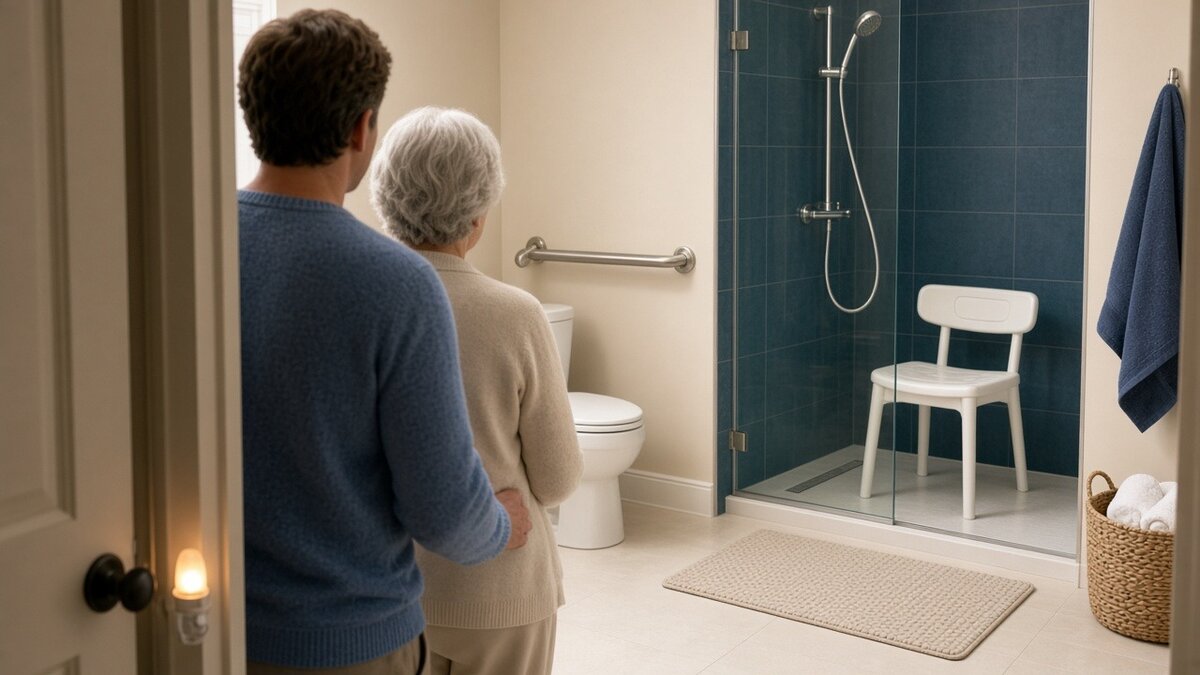
A one-weekend plan for adult children who want to make a parent's bathroom safer: what to check, what to buy, what to install, and what to leave to a pro.
Educational information only. This guide is not medical, therapy, or construction advice. Every person and every bathroom is different. Ask your parent's doctor, an occupational or physical therapist, and a licensed installer before making changes that depend on their health, balance, or the structure of the wall.
Why the bathroom comes first
Falls are common and often go unreported. According to the CDC, more than one in four adults age 65 and older falls each year, but less than half tell their doctor. Falling once doubles the chance of falling again. CDC also reports about 4.5 million emergency department visits each year for falls among older adults, including 1.4 million hospitalizations.
Most falls come from a combination of risk factors: leg weakness, balance problems, some medicines, vision changes, foot pain or poor footwear, and hazards in the home. You can't fix all of those in a weekend. But the home hazards are the part a family can usually change fastest, and MedlinePlus (from the National Library of Medicine) calls the bathroom the place in the home where falls most often happen.
The bathroom packs several risky moves into a small space. Floors get wet. People step over a tub edge, sit down and stand up from a low toilet, turn around in tight spaces, and walk there half-awake at night.
This checklist is built for one weekend. It goes zone by zone (toilet, shower or tub, floor, lighting, and the night path from bed) and ends with a buy-and-install list you can work through together.
Already read our general Senior Home Safety and Fall Prevention Checklist or Bathroom and Bedroom Safety Upgrades? This guide goes deeper on the bathroom alone, with a step-by-step setup plan.
Before you start: do the walkthrough with your parent, not for them
A bathroom setup goes better when the person who uses it helps plan it. Some parents resist safety changes because they feel like a sign of decline. Frame it as making the room easier, not as "you might fall."
Pick a time when your parent is rested. Ask them to walk through their normal routine while you watch and take notes:
- Walking in from the bedroom, including at night
- Sitting down on the toilet and standing back up
- Getting into and out of the shower or tub
- Reaching for soap, shampoo, towels, and toilet paper
- Drying off and stepping onto the bathroom floor
Watch for the moments where they grab something for balance. A towel bar, sink edge, shower door, or toilet paper holder used as a handhold is a sign a real grab bar belongs there.
Ask a few direct questions:
- Have you slipped, tripped, or felt dizzy in here, even if you didn't fall?
- Do you ever sit down to dress or dry off? Where?
- Is anything hard to reach?
- How many times do you get up at night?
If your parent has fallen recently, has new dizziness, or is recovering from surgery or a hospital stay, talk to their doctor before you start. NIA notes a doctor might suggest an occupational therapist, physical therapist, or nurse visit the home to assess safety. An OT can tell you exactly where grab bars should go and which aids fit your parent's body and routine. (Our guide to Medicare outpatient therapy after a fall explains how families typically arrange that visit.)
Bring a tape measure and your phone. Photograph each zone and write down measurements: toilet seat height, tub wall height, shower width, door width, and where the wall studs are, if you have a stud finder.
Zone 1: The toilet
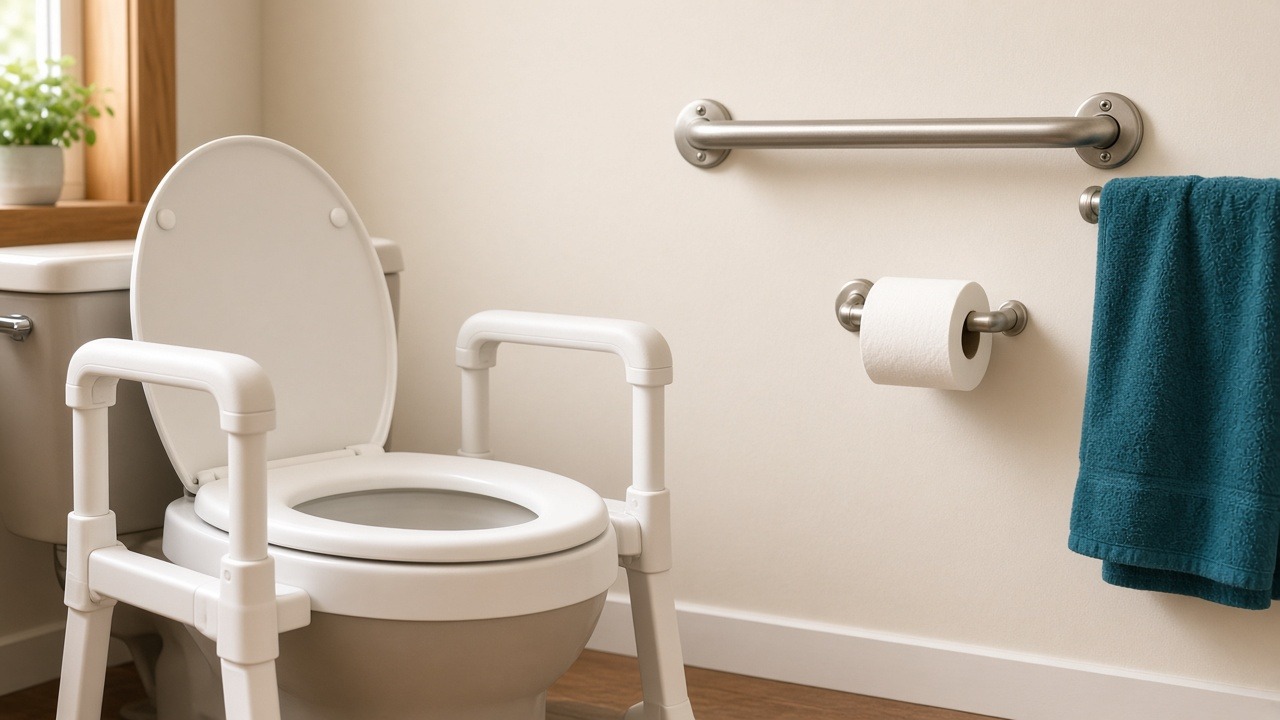
Sitting down and standing up from a low seat takes leg strength and balance. That's why the toilet is a common place to need support.
What to check
- Does your parent push off the sink, the wall, or a towel bar to stand up?
- Is the toilet seat low enough that their knees end up higher than their hips?
- Is there room on at least one side to install a grab bar into a stud?
- Is toilet paper within easy reach without twisting?
What can help
- A grab bar next to the toilet. CDC's Check for Safety checklist recommends grab bars next to the toilet. MedlinePlus says grab bars should be mounted vertically or horizontally, not diagonally, and that towel racks can't support a person's weight.
- A raised toilet seat, a toilet safety frame, or a commode chair. MedlinePlus notes that raising the toilet seat height can help prevent falls, and that a commode chair can be used instead of the toilet.
- A reachable toilet paper holder. Move it if your parent has to twist or lean far to reach it.
MedlinePlus also suggests sitting to urinate and not getting up suddenly afterward. Standing quickly can cause a drop in blood pressure and dizziness. CDC's STEADI program has a short brochure on this kind of dizziness, called postural hypotension, if it sounds familiar.
Zone 2: The shower or tub
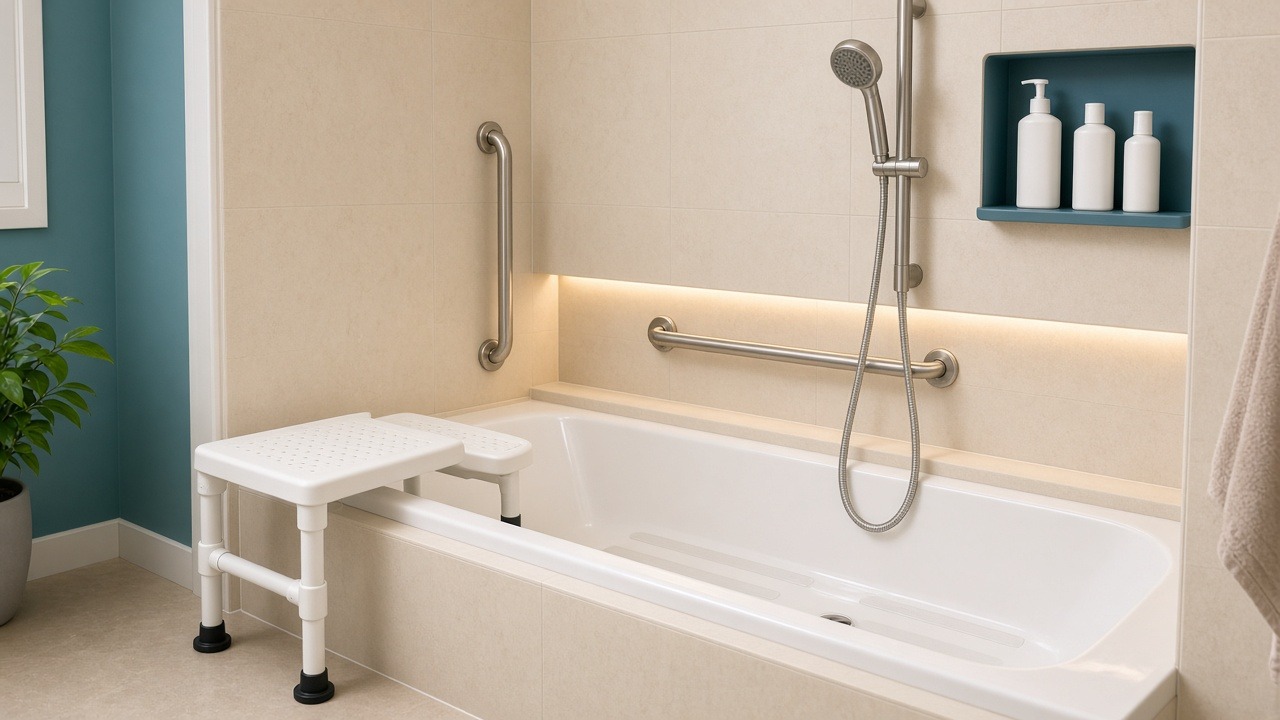
Stepping over a tub wall onto a wet surface is one of the riskiest moves in the house. So is standing for a long shower when someone tires easily.
What to check
- How high is the tub wall your parent steps over?
- Do they hold the shower door, curtain rod, soap dish, or faucet to steady themselves?
- Is the tub or shower floor slippery when wet?
- Can they reach soap and shampoo without bending low or stretching?
- Is the water heater set so tap water can't scald?
What can help
- Grab bars inside and outside the tub or shower. CDC recommends grab bars next to and inside the tub. NIA suggests mounting grab bars on both the inside and outside of the tub and shower. MedlinePlus says most people need two: one for getting in and out and one for standing up from a seated position.
- A shower chair, tub transfer bench, or plastic shower stool. MedlinePlus recommends sitting on a bath chair or bench to shower. A transfer bench straddles the tub wall so your parent can sit down outside the tub and slide across, instead of stepping over. Ask an OT which type fits the tub and your parent's mobility.
- A handheld shower head. NIA's home safety checklist suggests one alongside a shower stool to make bathing easier. It lets your parent wash while seated.
- Non-slip strips or a non-slip mat on the tub or shower floor. CDC recommends a non-slip rubber mat or self-stick strips.
- Easy-reach storage. Put a caddy or shelf at seated reach height so bottles aren't on the floor or high up.
- Water temperature. MedlinePlus and NIA suggest setting the water heater to no more than 120°F (49°C) to prevent burns. A single-lever faucet that mixes hot and cold can also help.
Zone 3: The floor
Wet floors and loose rugs cause slips and trips in the steps between the shower, the sink, and the door.
What to check
- Are there loose bath mats or throw rugs that slide or curl at the edges?
- Is the floor slick tile? Does water pool after a shower?
- Are there cords, scales, laundry baskets, or trash cans in the walking path?
- Is there a raised threshold at the bathroom door?
What can help
- Remove rugs that slide. NIA advises against throw rugs and small area rugs. If your parent wants a mat outside the tub, MedlinePlus suggests a non-skid bath mat for firm footing.
- Add non-slip strips or mats where the floor gets wet. NIA suggests nonskid strips or mats on all surfaces that may get wet, including next to the tub, toilet, and sink if the floor is uncarpeted.
- Keep the floor dry. Put a towel or robe within reach of the shower so your parent can dry off before stepping out.
- Clear the path. Move scales, baskets, and cords out of the line between the door, toilet, sink, and shower.
- Point out thresholds. If the door threshold is raised, mark the edge with high-contrast tape or ask a contractor about a lower one.
Zone 4: Lighting
Good light helps your parent see wet spots, edges, and thresholds before they step on them. Our guide to vision changes and home safety covers how eyesight affects the rest of the home.
What to check
- Can your parent find the light switch before stepping into the bathroom?
- Is the shower area dark when the curtain or door is closed?
- Are bulbs bright enough, and are any burned out?
- Is there glare from shiny tile or mirrors?
What can help
- Bright, even light over the sink and in the shower area. Replace dim or burned-out bulbs.
- A lighted or easy-to-find switch at the door, or a plug-in light that turns on by itself.
- Contrast. A different-colored toilet seat, grab bar, or tub edge can make surfaces easier to see.
Zone 5: The night path from bed to bathroom
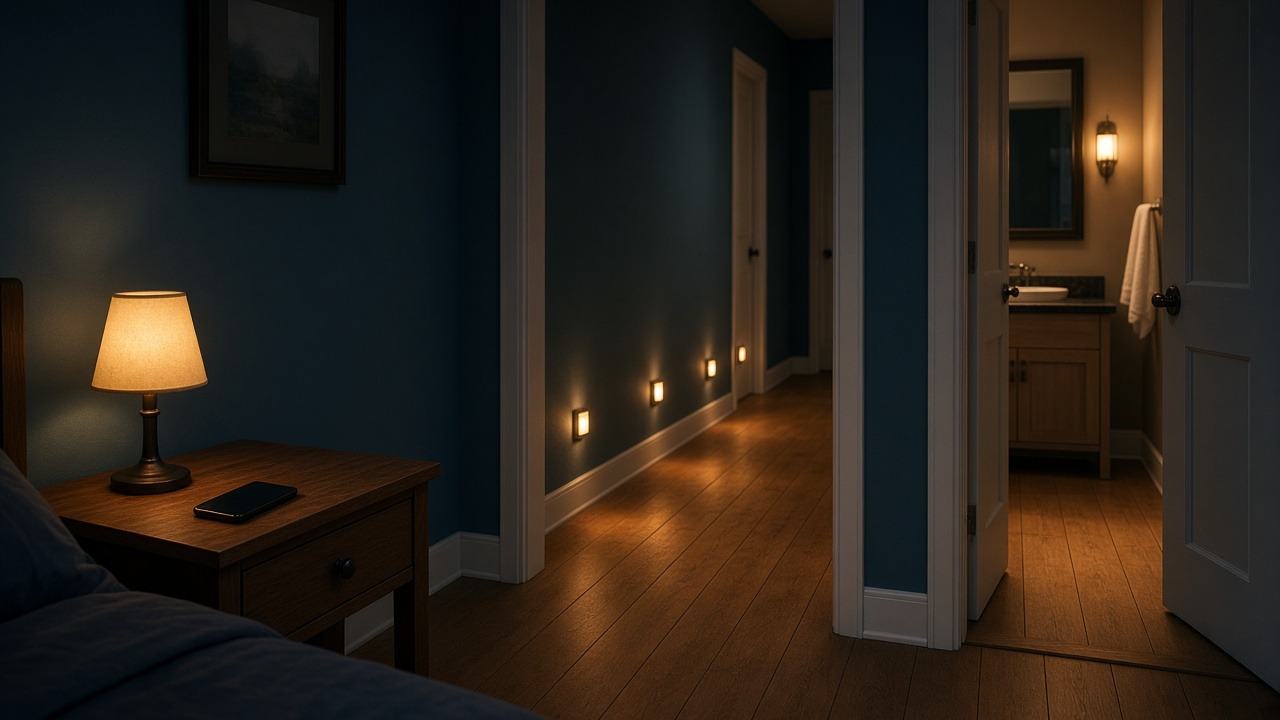
Nighttime trips combine a dark room, a sleepy person, and sometimes urgency. Many families fix the bathroom and forget the hallway.
What to check
- Walk from your parent's side of the bed to the toilet in the dark. What would they trip on?
- Can they turn on a light from bed?
- Is the hallway clear of furniture, shoes, pet beds, and cords?
- Is there a phone within reach of the bed?
What can help
- Night lights along the route. CDC recommends a night light if the path from the bed to the bathroom is dark, noting that some turn on by themselves after dark. NIA suggests leaving a bathroom light on at night or using an automatic night light.
- A lamp or switch that's easy to reach from bed, plus a flashlight by the bed in case the power goes out.
- A clear, straight path. Move furniture and remove loose rugs along the route.
- A charged phone by the bed. NIA suggests a landline or a well-charged phone near the bed. If your parent lives alone, a way to call for help matters even more. A medical alert system is one option; NIA notes there is a fee for this service and it's usually not covered by insurance.
- A bedside commode if nighttime trips are frequent or unsteady. Ask their doctor or OT whether one makes sense.
The weekend buy and install checklist
Use this table to decide what to buy, what you can set up yourself, and what needs a professional. Not every home needs every item. Your walkthrough notes and an OT's advice should decide the list.
| Item | Where it goes | Setup | Notes |
|---|---|---|---|
| Grab bar(s) | Next to the toilet; inside and at the entry of the tub or shower | Pro or experienced DIY | Anchor into studs or with anchors rated for grab bars. Never use towel bars, soap dishes, or suction-only bars as support. |
| Raised toilet seat or toilet safety frame | Toilet | DIY | Check fit for your toilet shape and your parent's height. |
| Shower chair, stool, or tub transfer bench | Tub or shower | DIY | Ask an OT which type fits the tub and the person. Check the weight rating. |
| Handheld shower head | Shower | DIY or plumber | Lets your parent wash while seated. |
| Non-slip strips or mat | Tub or shower floor | DIY | Clean and dry the surface first so adhesive strips stick. |
| Non-skid bath mat | Outside the tub or shower | DIY | Replace any mat that slides or curls. |
| Night lights | Bedroom, hallway, bathroom | DIY | Automatic ones turn on in the dark. |
| Brighter bulbs | Bathroom and hallway | DIY | Check fixture wattage limits. |
| Shower caddy at seated height | Shower | DIY | Keeps bottles off the floor. |
| Water heater check | Water heater | DIY or plumber | No more than 120°F (49°C), per MedlinePlus. |
Grab bars deserve extra care. A grab bar only works if the wall holds it. Bars need to be fastened into wall studs or with anchors made for grab bars, and tile, fiberglass tub surrounds, and older walls can be tricky. If you're not confident, hire a licensed installer or handyman experienced with grab bars. For reference, the federal ADA standards for public facilities place grab bars 33 to 36 inches above the floor. A private home doesn't have to follow ADA standards, and an OT may recommend a different height or placement for your parent.
A simple weekend plan
Friday evening (30–60 minutes): walk through and measure
- Do the routine walkthrough with your parent.
- Photograph each zone and write down measurements.
- Note where your parent grabs for balance.
- Decide whether you need an OT visit or a professional installer before you buy anything.
Saturday: buy and set up the no-tools items
- Remove sliding rugs and clear the floor path.
- Put down non-slip strips or a mat in the tub or shower.
- Plug in night lights along the bed-to-bathroom route and replace dim bulbs.
- Set up the shower chair or bench, the raised toilet seat or frame, and a caddy at seated height.
- Check the water heater setting.
Sunday: install and test
- Install grab bars, or confirm the installer's appointment.
- Install the handheld shower head if you're doing it yourself.
- Have your parent rehearse the routine with you nearby: sitting and standing at the toilet, getting in and out of the shower, and the night walk with the lights off.
- Adjust anything that's in the wrong place. If your parent avoids a new aid, ask why. It may be the wrong height or in the wrong spot.
What a bathroom setup can't fix
Home changes are one part of fall prevention. CDC lists other risk factors families should raise with a doctor: lower body weakness, walking and balance problems, vitamin D deficiency, vision problems, foot pain or poor footwear, and medicines that affect balance, including some over-the-counter ones.
After the weekend, make a short follow-up list:
- Ask the doctor for a fall-risk check and a medication review. Our medication management guide can help you prepare.
- Schedule an eye exam if it's been a while, since CDC lists vision problems as a fall risk factor.
- Ask about strength and balance exercise or a physical therapy referral.
- Check footwear and slippers for good grip and a secure fit.
- Re-check the bathroom every few months, and sooner after any illness, hospital stay, or new medicine.
If the bathroom needs bigger changes, like a walk-in shower or a wider door, our guide to paying for aging-in-place home modifications covers where families look for help. Some equipment may also be covered in certain situations; see durable medical equipment at home.
Who to call
| Question | Who to contact |
|---|---|
| Fall risk, dizziness, medicines | Your parent's doctor or pharmacist |
| Which aids fit, and where grab bars should go | An occupational therapist (ask the doctor for a referral) |
| Strength and balance | A physical therapist |
| Installing grab bars and fixtures | A licensed contractor, handyman, or plumber |
| Local home modification or safety programs | Eldercare Locator: eldercare.acl.gov or 1-800-677-1116 |
| Emergency after a fall | 911 |
Printable checklist: Weekend Bathroom Safety Setup
Print this page and work through it together. Educational only.
Walkthrough (Friday)
- ☐ Watch your parent's full bathroom routine, including the night walk
- ☐ Note every spot where they grab something for balance
- ☐ Measure toilet seat height, tub wall height, and shower width
- ☐ Find wall studs near the toilet and tub or shower
- ☐ Decide whether you need an OT visit or a professional installer
Toilet
- ☐ Grab bar next to the toilet (not a towel bar)
- ☐ Raised toilet seat, safety frame, or commode, if needed
- ☐ Toilet paper within easy reach
Shower or tub
- ☐ Grab bars inside and at the entry
- ☐ Shower chair, stool, or transfer bench
- ☐ Handheld shower head
- ☐ Non-slip strips or mat on the tub or shower floor
- ☐ Soap and shampoo at seated reach
- ☐ Water heater at no more than 120°F (49°C)
Floor and lighting
- ☐ Sliding rugs removed; non-skid mat outside the tub
- ☐ Clear path from door to toilet, sink, and shower
- ☐ Bright bulbs; easy-to-find light switch
- ☐ Towel or robe within reach of the shower
Night path
- ☐ Night lights from bed to bathroom
- ☐ Lamp or switch reachable from bed; flashlight by the bed
- ☐ Hallway clear of furniture, cords, and shoes
- ☐ Charged phone by the bed
Test and follow up
- ☐ Rehearse the routine together after setup
- ☐ Book a doctor visit for a fall-risk check and medication review
- ☐ Set a date to re-check the bathroom: ____________
Key contacts: Doctor ____________ · OT/PT ____________ · Installer ____________ · Eldercare Locator 1-800-677-1116
Sources (checked October 27, 2026)
- CDC, Facts About Older Adult Falls: https://www.cdc.gov/falls/data-research/facts-stats/index.html
- CDC STEADI, Patient and Caregiver Resources (includes Check for Safety and Postural Hypotension brochures): https://www.cdc.gov/steadi/patient-resources/
- CDC STEADI, Check for Safety: A Home Fall Prevention Checklist for Older Adults: https://www.cdc.gov/steadi/pdf/steadi-brochure-checkforsafety-508.pdf
- National Institute on Aging, Preventing Falls at Home: Room by Room: https://www.nia.nih.gov/health/falls-and-falls-prevention/preventing-falls-home-room-room
- National Institute on Aging, Worksheet: Home Safety Checklist: https://www.nia.nih.gov/sites/default/files/2023-04/worksheet-home-safety-checklist_1.pdf
- MedlinePlus (National Library of Medicine), Bathroom safety for adults: https://medlineplus.gov/ency/patientinstructions/000021.htm
- U.S. Access Board, ADA Accessibility Standards (section 609.4, grab bar height in covered facilities): https://www.access-board.gov/ada/
- Eldercare Locator (Administration for Community Living): https://eldercare.acl.gov/
Educational information only; not medical, therapy, or construction advice.
Keep Reading
Related guides in Senior Safety
Trusted Help
Trusted Medicare coverage help
Hospital status, skilled nursing coverage, and post-discharge options often depend on formal Medicare rules, plan rules, and the exact date of service.
Use these links to verify eligibility, coverage, state rules, or local services before making a personal medical, legal, or financial decision.