
A practical home safety guide for reducing fall risk, medication problems, emergency confusion, and preventable hazards.
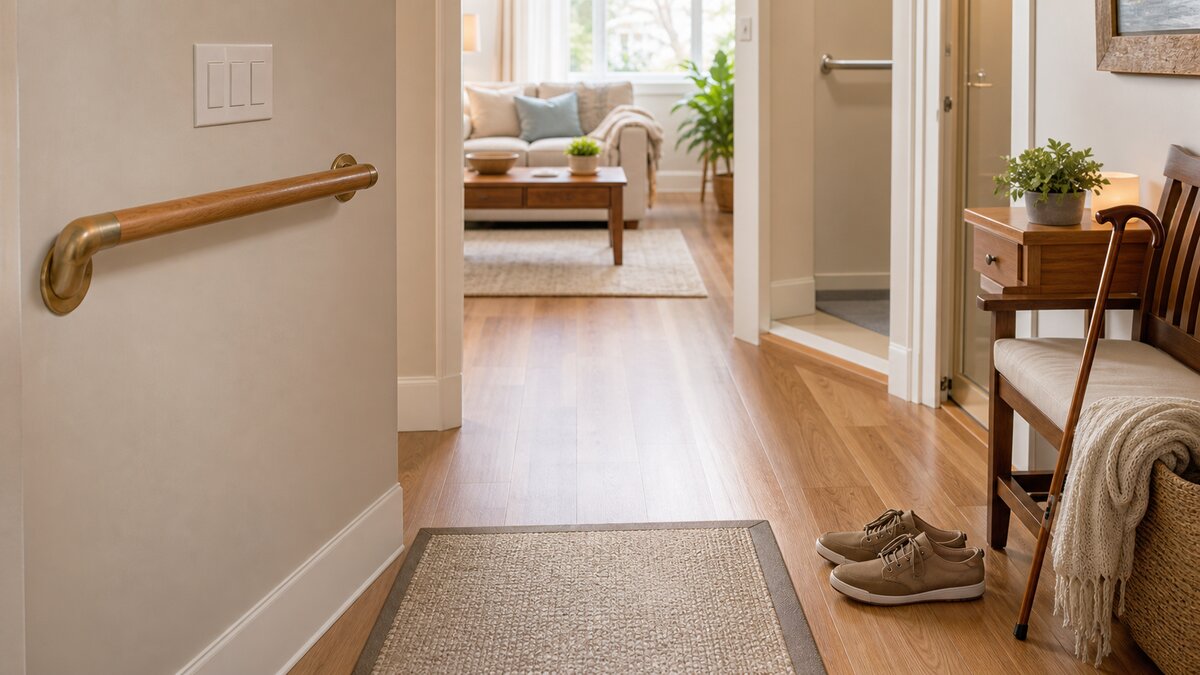
Home safety is not about removing independence. It is about making the home easier to use on a bad day: when someone is tired, dizzy, carrying laundry, rushing to the bathroom, or waking up at night. Falls, medication mistakes, and emergency confusion are common reasons families suddenly need more help.
Start with fall risk
The CDC's STEADI initiative offers fall prevention resources for older adults, caregivers, and health professionals. Review CDC STEADI and the CDC's Check for Safety home fall prevention checklist. A clinician can also review balance, vision, footwear, blood pressure, medications, and prior falls.
Make walking paths safer
- Remove clutter, loose cords, and unstable small tables from walking paths.
- Secure or remove throw rugs.
- Add bright lighting at entrances, hallways, bathrooms, stairs, and bedside areas.
- Use night lights from bedroom to bathroom.
- Repair uneven flooring, loose thresholds, and broken steps.
Focus on bathroom safety
Bathrooms combine water, hard surfaces, privacy, and urgent movement. Add properly installed grab bars near the toilet and shower, use non-slip surfaces, consider a shower chair, and keep toiletries within reach. Avoid towel bars as grab bars unless they are rated and installed for body weight.
Review medications
Some medicines and combinations can increase dizziness, confusion, sleepiness, or fall risk. Ask a doctor or pharmacist to review prescriptions, over-the-counter medicines, supplements, alcohol use, and duplicate medications. The National Institute on Aging notes that medication side effects and interactions can affect memory, sleep, and brain function in older adults; see NIA's overview of cognitive health and older adults.
Prepare for emergencies
- Post emergency contacts where responders can find them.
- Keep a current medication list and allergy list.
- Label the preferred hospital and primary doctor.
- Make sure house numbers are visible from the street.
- Consider a medical alert system if someone lives alone or falls are likely.
Watch for risk signals
Multiple falls, unexplained bruises, missed medications, spoiled food, unpaid bills, wandering, frequent 911 calls, or fear of bathing may mean the current plan is no longer enough. Consider home care, adult day programs, physical therapy, occupational therapy, family check-ins, or a higher-support living setting.
Use YouRetire tools together
Create a printable Emergency Contact Sheet and save it to your dashboard. If the home requires more support, compare costs with the private caregiver and assisted living tools.
Keep Reading
Related guides in Senior Safety
Trusted Help
Trusted home safety help
Use a practical checklist and re-check the home as health, mobility, medication, or memory needs change.
Use these links to verify eligibility, coverage, state rules, or local services before making a personal medical, legal, or financial decision.