
A calm, day-by-day checklist for the week after a parent falls at home: when to get help right away, the doctor follow-up, a medication check, footwear and lighting, bathroom and stair safety, and a daily check-in plan.

For adult children whose parent just fell at home, whether they went to the emergency room or brushed it off, and who want a calm, day-by-day plan for the week that follows.
Educational information only. This guide is not medical advice and does not replace your parent's doctor, nurse, pharmacist, or therapist. If your parent hit their head, takes a blood thinner, or seems confused, in more pain, or "not themselves," contact their clinician or emergency services right away rather than working through a checklist.
Why the first week after a fall matters
A phone call that starts with "I'm fine, but I fell" can leave you with a dozen questions and no clear place to start. Your parent may be embarrassed, sore, or eager to move on. You may be miles away, trying to judge from their voice how worried to be.
Falls are common, and they are worth taking seriously even when nothing seems broken. According to the CDC, more than one in four adults age 65 and older falls each year, but less than half tell their doctor. Falling once doubles the chance of falling again. About 37% of older adults who fall report an injury that needed medical treatment or limited their activity for at least a day.
The CDC also points to a quieter problem: many people who fall, even without an injury, become afraid of falling. That fear can lead them to cut back on everyday activities, and being less active makes them weaker, which raises the chance of another fall.
That's why the week after a fall is a useful window. Your parent's attention is on safety, the details of what happened are still fresh, and small changes (a doctor visit, a medicine review, a night light, a daily phone call) are easier to agree on now than six months from now. The National Institute on Aging (NIA) advises telling the doctor about any fall since the last check-up, even if there was no pain, because a fall can point to a new medical problem or to medicines or eyesight issues that can be corrected.
This checklist breaks that week into one focus per day. It doesn't have to be done in exactly seven days, and you don't need to do it alone.
Coming home from a hospital stay? Start with our Hospital Discharge Planning for Families checklist, then use this guide once your parent is back home.
Before you start: when it can't wait for a checklist
Some situations need medical attention now, not on Day 2.
The CDC says an older person who falls and hits their head should see their doctor right away to make sure they don't have a brain injury. That matters even more if your parent takes a blood thinner. The CDC notes that anticoagulants such as warfarin, rivaroxaban, and apixaban, and antiplatelet medicines such as clopidogrel and aspirin, may increase the risk of bleeding in the brain after a head injury.
The CDC also notes that brain injuries can be missed in older adults because symptoms can overlap with other conditions, such as dementia. Its patient instructions for brain injury list danger signs that mean the people checking on someone should call 911 or go to an emergency department right away:
- A headache that gets worse and doesn't go away
- Significant nausea or repeated vomiting
- Unusual behavior, increased confusion, restlessness, or agitation
- Drowsiness or being unable to wake up
- Slurred speech, weakness, numbness, or decreased coordination
- Convulsions or seizures
- Loss of consciousness
Some of these signs can show up hours or days after the fall, so keep them in mind all week, not just on the first day. And if your parent has new pain when standing or walking, can't bear weight on a leg, or simply seems much worse than before the fall, call their clinician or emergency services. When in doubt, call. Nobody will mind that you checked.
How to use this checklist
Your starting point depends on what happened right after the fall.
- If your parent went to the emergency room or hospital, gather the discharge papers, follow the instructions they were given, and make sure any follow-up appointments on that paperwork are actually booked. The days below fill in what discharge papers often leave out about the home itself.
- If your parent didn't see anyone, Day 2 matters most. Even a fall that "didn't hurt" is worth a call to their doctor.
Here is the week at a glance:
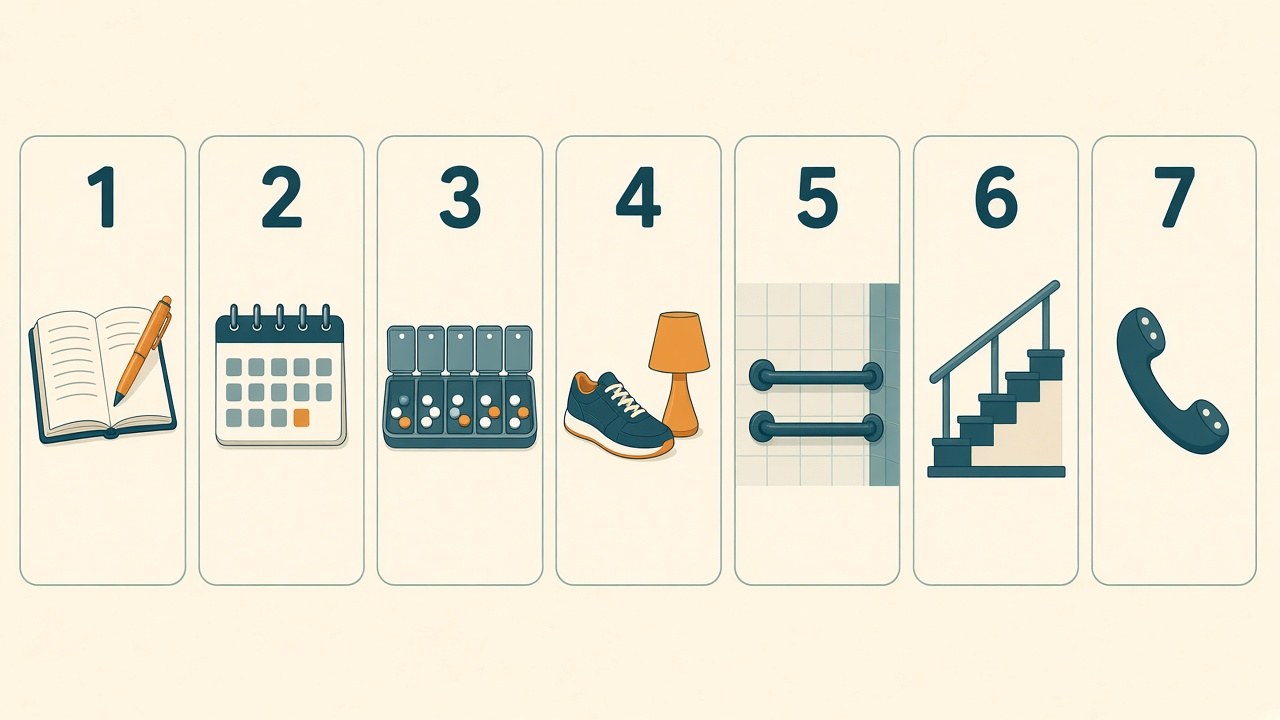
| Day | Focus | The one thing to finish |
|---|---|---|
| Day 1 | Settle in and write down what happened | A short written "fall story" and a phone within reach |
| Day 2 | Doctor follow-up | An appointment on the calendar (or a call back from the office) |
| Day 3 | Medicines | One complete medication list, reviewed by a doctor or pharmacist |
| Day 4 | Footwear and lighting | Safe shoes by the bed and a lit path from bed to bathroom |
| Day 5 | Bathroom | A plan for grab bars, a non-slip surface, and any seating |
| Day 6 | Stairs, floors, and the rest of the house | Clear walkways, secure rails, and a walk-through of the main path |
| Day 7 | Who checks in | A written daily check-in plan everyone has agreed to |
If your parent is sore and tired, stretch it out. Doing Days 1 to 3 well is more useful than rushing all seven.
Day 1: Settle in and write down what happened
The first day is about comfort and information, not projects.
Make the next few hours safer
- ☐ Keep a charged phone within your parent's reach, including at the bedside. NIA suggests a well-charged cordless or mobile phone carried at all times, plus a landline or charged phone near the bed.
- ☐ Clear the route they'll use most today: chair, bathroom, kitchen, bed.
- ☐ Put the things they need often (water, glasses, medicines, TV remote, charger) where they don't have to bend, reach high, or climb.
- ☐ If they were given a cane or walker, keep it next to wherever they sit or sleep.
- ☐ Decide who is checking in tonight and tomorrow morning, and how.
Write down the "fall story" while it's fresh
Doctors often ask about what led up to a fall, and details fade quickly. Ask gently, without blame, and jot down the answers. You might frame it as "Help me remember this for the doctor."
- ☐ When did it happen (date, time of day)?
- ☐ Where (which room, stairs, outside, getting out of bed or a chair)?
- ☐ What were they doing just before?
- ☐ Did they feel dizzy, lightheaded, weak, or short of breath before falling?
- ☐ Did they trip or slip on something? What was on their feet?
- ☐ Were the lights on? Were they wearing their glasses?
- ☐ Did they hit their head? Did they lose consciousness, even briefly?
- ☐ Could they get up on their own? How long were they on the floor?
- ☐ Have they had any other falls or near-falls recently?
- ☐ What medicines did they take that day, and when?
Keep this note somewhere you'll both find it, like the front of an emergency binder or a shared note on your phone.
A word on tone. Many older adults downplay a fall because they're worried about losing independence. Starting with "I want to help you keep doing things your way" often goes further than "You could have been really hurt."
Day 2: Call the doctor and book the follow-up
The CDC's caregiver guidance is direct: tell a healthcare provider right away if your loved one has fallen, is worried about falling, or seems unsteady. MedlinePlus, from the National Library of Medicine, also says to contact the provider after a fall or even a near-fall.
- ☐ Call your parent's primary care office (or the clinician named on the ER discharge papers) and say plainly: "My parent fell at home on [date] and we'd like a follow-up."
- ☐ Ask whether they should be seen in person, and how soon.
- ☐ Share the fall story notes from Day 1.
- ☐ If the ER or hospital ordered tests, imaging, or a specialist visit, confirm those are scheduled.
- ☐ Ask whether there's anything to watch for at home this week and when to call back.
Questions to bring to the appointment
MedlinePlus publishes a list of questions to ask about preventing falls. Adapted for families, consider asking:
- Could any of my parent's medicines make them sleepy, dizzy, or lightheaded?
- Are there exercises that would help their strength and balance? Would physical therapy help?
- Would an occupational therapist's home safety visit be useful?
- Should they be using a cane or walker? If so, can someone check that it's the right size?
- Does the bathroom need a shower chair, a raised toilet seat, or grab bars?
- Is it safe for them to use the stairs right now? Should they sleep on the main floor for a while?
- Do they need help with bathing, cleaning, cooking, or laundry while they recover?
- Should they have their eyes or feet checked?
- What should they do if they fall again? Would a medical alert system make sense?
Therapy and home health
A doctor may suggest physical therapy, occupational therapy, a walking aid, or other steps, as NIA notes. If that comes up, our guide to Medicare Outpatient Therapy After a Fall explains PT, OT, and the questions to ask about coverage. If your parent is having a hard time leaving the house, ask whether Medicare home health care might apply. It's different from paid help with daily chores, and the difference matters for who pays.
If getting to the appointment is the hard part, our medical transportation guide covers ride options and backup plans.
Day 3: Do a medication check
Medicines are one of the most common things clinicians look at after a fall. NIA notes that some medicines can raise fall risk by causing dizziness or confusion, and that the more medicines a person takes, the more likely they are to fall. The CDC lists medicines such as tranquilizers, sedatives, and antidepressants among fall risk factors, and notes that even some over-the-counter medicines can affect balance.
The goal today isn't to change anything. It's to put a complete, accurate list in front of someone who can review it.

- ☐ Gather every medicine your parent takes, prescription and over-the-counter, including sleep aids, allergy pills, pain relievers, vitamins, and supplements. Some families call this a "brown bag" review.
- ☐ Write one list: name, dose, when it's taken, what it's for, and who prescribed it.
- ☐ Note anything new or changed in the past few weeks, including anything started at the hospital.
- ☐ Ask the doctor or pharmacist to review the whole list for anything that could cause dizziness, sleepiness, or unsteadiness. The CDC recommends showing a healthcare provider or pharmacist all medications, including over-the-counter ones and supplements.
- ☐ Ask whether any medicine should be taken at a different time of day.
- ☐ Don't stop or change a prescription on your own. Some medicines can cause problems if stopped suddenly. Let the prescriber make that call.
- ☐ Set up a pill organizer or reminder if doses are being missed or doubled.
- ☐ Safely clear out expired or discontinued medicines. Our unused medication disposal guide shows how.
Standing up slowly. NIA notes that getting up too quickly can cause blood pressure to drop and make a person feel wobbly, and suggests asking to have blood pressure checked lying down and standing. If your parent feels dizzy when they stand, mention it to the doctor. In the meantime, a simple habit helps: sit on the edge of the bed for a moment before standing, and have something steady to hold.
For a deeper look at routines and lists, see Medication Management for Older Adults and Caregivers.
Day 4: Check footwear and lighting
Feet, shoes, and light are easy to overlook and quick to improve.
Footwear
The CDC's fact sheet on feet and footwear says to always wear properly fitted shoes inside and outside the home, and describes a safer shoe as having a firm heel collar, a low, broad heel, a textured sole, and laces or straps that hold the shoe on the foot. It advises against walking in socks only, heels over one inch, shoes with smooth soles, and backless styles such as mules or clogs. NIA adds: don't walk on stairs or floors in socks or in smooth-soled shoes or slippers.
- ☐ Look at what your parent was wearing when they fell, and what they wear around the house most days.
- ☐ Set aside slippers that are backless, stretched out, or worn smooth on the bottom.
- ☐ Put a pair of supportive, closed-back shoes or slippers with a non-slip sole right by the bed.
- ☐ If your parent has foot pain, numbness, or toe changes, ask the doctor about a foot check or seeing a podiatrist. The CDC suggests a foot check by a healthcare provider once a year.
Lighting
NIA recommends night lights and light switches close to the bed, a light on in the bathroom at night or a night light that turns on automatically, and light switches at both the top and bottom of stairs. It also suggests plug-in motion-activated lights for stairwells and pathways, and keeping a flashlight by the bed in case the power goes out.
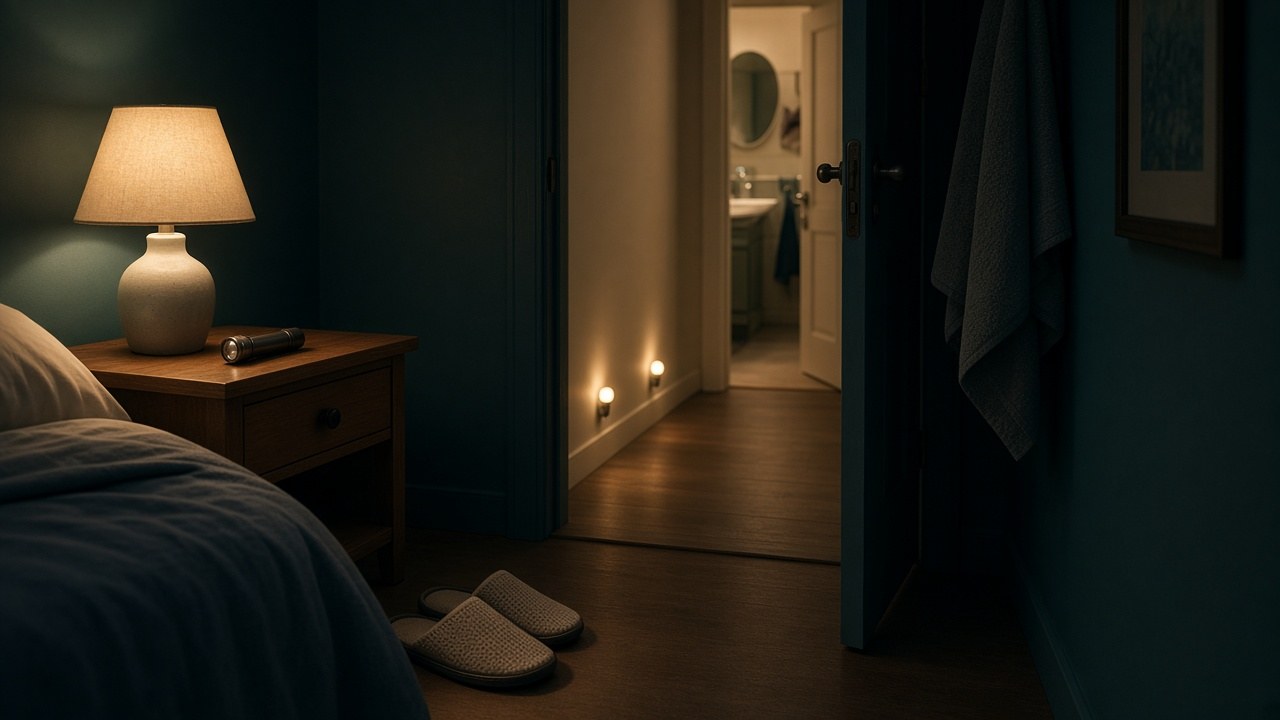
- ☐ Sit on the edge of your parent's bed with the lights off. Can they reach a light before standing up?
- ☐ Walk the path from bed to bathroom at night. Add plug-in or motion-activated night lights where it's dark.
- ☐ Put a flashlight on the nightstand.
- ☐ Check hallways and entryways for burned-out or dim bulbs. The CDC notes older adults need brighter light to see well.
- ☐ Turn on the porch light in the evening if your parent comes and goes after dark.
- ☐ Ask whether glasses are up to date. The CDC suggests an eye exam at least once a year. Our guide to vision changes and home safety has more ideas.
Day 5: Make the bathroom safer
Bathrooms combine hard surfaces, water, and a lot of standing up and sitting down. The CDC recommends grab bars next to and inside the tub and next to the toilet, and non-slip mats in the tub and on shower floors. NIA adds grab bars on both the inside and outside of the tub and shower.
- ☐ Walk through the bathroom with your parent and watch how they get on and off the toilet and in and out of the shower or tub.
- ☐ Note where they reach for support today. Towel bars, sinks, and soap dishes aren't built to hold a person's weight.
- ☐ Plan grab bars next to the toilet and in and around the shower or tub, installed into wall studs or with proper anchors. If you're not sure, hire someone who installs them regularly.
- ☐ Add a non-slip surface in the tub or shower, and a non-skid mat outside it.
- ☐ Ask the doctor or an occupational therapist whether a shower chair, transfer bench, handheld shower, or raised toilet seat would help. MedlinePlus lists these as questions worth asking.
- ☐ Keep soap, shampoo, and towels within reach of where your parent sits or stands.
- ☐ Leave a light on at night or use an automatic night light, as NIA suggests.
- ☐ Agree on a plan for bathing this week if your parent feels unsteady, whether that's a family member nearby, a seated wash, or a home health aide visit.
For a full room-by-room setup with a weekend buy and install list, see our Bathroom Fall Prevention for Aging Parents checklist. If you're wondering what Medicare or other programs may cover for equipment, our durable medical equipment guide and paying for home modifications guide walk through the questions.
Day 6: Stairs, floors, and the rest of the house
Today is a slow walk along the paths your parent actually uses: front door to kitchen, kitchen to chair, chair to bedroom, and any stairs. The CDC's caregiver guidance notes that most falls happen at home.
Stairs
- ☐ Check that there are handrails on both sides and that they're secure. NIA recommends handrails on both sides of any stairs and holding them going up and down, even when carrying something.
- ☐ Confirm there are light switches at the top and bottom of the stairs.
- ☐ Clear anything stored on the steps.
- ☐ Check outdoor steps for loose or uneven spots and slippery surfaces. NIA suggests non-slip material on outdoor stairs.
- ☐ Ask the doctor whether stairs are OK right now. If not, consider setting up a temporary bedroom on the main floor for a few weeks. MedlinePlus lists this as a question to raise.
Floors and walkways
- ☐ Remove small throw rugs, or secure them so they can't slide. NIA advises against throw rugs and small area rugs; the CDC suggests removing them or using double-sided tape.
- ☐ Clear books, papers, clothes, shoes, and pet items off the floor.
- ☐ Move electrical and phone cords along the walls and out of walking paths, as NIA suggests.
- ☐ Look for uneven thresholds or loose flooring and note anything that needs a repair.
Reaching and everyday tasks
- ☐ Move frequently used kitchen items, clothes, and toiletries to shelves between waist and shoulder height.
- ☐ Put away step stools, or, if one is truly needed, use a steady one with a handrail. NIA suggests a reach stick instead of standing on a chair.
- ☐ If a cane or walker was recommended, check that it's the right height. NIA says walker wheels should roll smoothly, and that borrowed equipment should be checked by a health care provider for size and safety.
- ☐ Consider a grab bar or sturdy surface near the front door for balance while handling keys, as NIA suggests.
Our Senior Home Safety and Fall Prevention Checklist covers the whole house in more detail if you want to keep going after this week.
Day 7: Decide who checks in, and how
The last day is about the people, not the house. NIA's advice for anyone who might fall when alone is to keep a well-charged phone with them at all times, arrange daily contact with a family member or friend, and consider an emergency response system. NIA also notes that some smartwatches can make emergency calls or detect fall-like movements, and that a smart speaker can be set up to call contacts.
Start with the simplest option that fits your parent's life and add more only if needed.
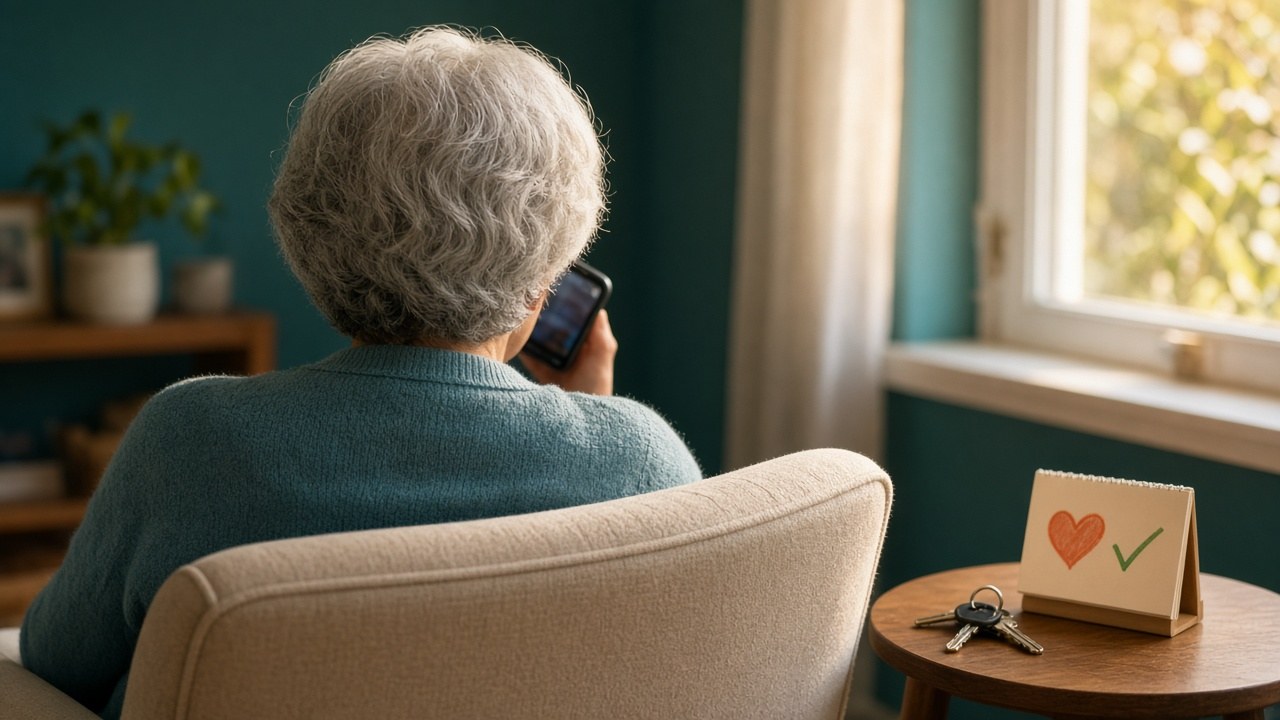
Build a daily check-in plan
- ☐ Agree on a time for a daily call or text, and who makes it. Morning check-ins catch problems from the night before.
- ☐ Decide what happens if your parent doesn't answer: how long to wait, who to call next, and who lives close enough to stop by.
- ☐ Add a nearby neighbor or friend who's willing to be the "go knock on the door" person, and make sure they have your number.
- ☐ Make sure your parent carries a charged phone from room to room, not just leaves it on the counter. A pocket, belt clip, or walker basket helps; MedlinePlus suggests a small walker basket for a phone.
- ☐ Put key contacts on speed dial or a favorites list.
- ☐ Plan how help can get through the door: a trusted neighbor with a key, a lockbox, or a smart lock.
Think about whether a medical alert system fits
If your parent lives alone, spends long stretches alone, or had trouble getting up after this fall, a phone and a daily call may not be enough on their own. A medical alert system (sometimes called a personal emergency response system, or PERS) lets someone call for help with a button or, on some devices, through automatic fall detection. It's a personal decision with real costs and trade-offs. Our Medical Alert Systems for Seniors Living Alone checklist walks through when one makes sense, what to ask, and how to test one before you commit.
Use this sample check-in schedule as a starting point
| Who | When | How | If no answer |
|---|---|---|---|
| Adult child (or main family contact) | Every morning by 10 a.m. | Phone call or video call | Try again in 30 minutes, then call the neighbor |
| Nearby neighbor or friend | A few times a week, and on call | Short visit or wave from the porch | Has a key or lockbox code to check inside |
| Second family member | Evenings or weekends | Text or call | Covers when the main contact is traveling |
| Parent | Daily | Carries a charged phone; uses medical alert if they have one | Calls 911 for an emergency |
Write the plan down, share it with everyone on it, and keep a copy by your parent's phone. If the plan depends on one person, our Caregiver Backup Plan guide helps you think through who steps in when that person can't.
After week one: fear of falling and staying active
It's natural for your parent to feel shaky, physically or emotionally, after a fall. The CDC notes that fear of falling can lead people to cut back on activity, which makes them weaker and more likely to fall. Gently encourage the opposite: safe, steady movement.
- Ask about exercise. The CDC says activities that improve balance and strengthen legs, like tai chi, can help prevent falls, and suggests checking with a healthcare provider about the right kind of program. A physical therapist can build one around your parent's recovery.
- Look for a falls-prevention class. The National Council on Aging (NCOA) describes A Matter of Balance as an eight-session group program designed to reduce fear of falling and increase activity among older adults living in the community. Classes are offered in person and online in many areas. The Eldercare Locator (1-800-677-1116) can connect you with your local Area Agency on Aging to ask what's offered nearby.
- Keep up the things they enjoy. Social time matters, too. If your parent has been pulling back, our guide to social isolation in retirement has ideas.
- Watch for new changes. A second fall, new dizziness, or a decline in walking is worth another call to the doctor.
Talking with your parent without taking over
Most of this list works only if your parent is on board. A few approaches families find helpful:
- Ask before you fix. "Would it help if I moved the coffee mugs down a shelf?" lands differently than rearranging the kitchen while they're napping.
- Tie changes to what they want. If your parent wants to keep gardening, driving to church, or living on their own, connect each change to that goal.
- Start small. A night light and a pair of good slippers on Day 4 can build trust for bigger changes later.
- Let the professionals say the hard part. A doctor or occupational therapist recommending a shower chair can carry more weight than a worried son or daughter.
- Respect a "not yet." If your parent isn't ready for a change, note it and revisit it in a few weeks. Keep the conversation open.
- Check your own assumptions about hearing. If your parent has hearing loss, phone check-ins and instructions can go sideways. Our guide to hearing loss and caregiver communication has practical tips.
What a first-week checklist can't do
This week is a strong start, not a finish line.
- It can't diagnose why your parent fell. Only their clinicians can look at the full medical picture.
- It can't replace therapy. If PT or OT is recommended, the exercises and practice in daily tasks are where a lot of the real recovery happens.
- It can't make a home fall-proof. The goal is fewer hazards and a faster response if something does happen.
- It isn't a one-time job. Revisit the plan after any new fall, hospital stay, medication change, or change in how your parent is getting around.
If your parent needs more help at home than family can give, our guides to home care hours and Medicare home health vs. home care are good next reads.
Who to call
| Situation | Who to contact |
|---|---|
| Head bump and taking a blood thinner, or any danger sign listed above | 911 or the nearest emergency department |
| New or worsening pain, can't put weight on a leg, seems much worse | Your parent's doctor right away, or emergency services |
| Follow-up after the fall | Primary care office or the clinician on the discharge papers |
| Questions about medicines and side effects | Your parent's pharmacist or prescriber |
| Strength, balance, walking aids | Physical therapist (ask the doctor for a referral) |
| Bathroom setup, daily tasks, home safety visit | Occupational therapist (ask the doctor for a referral) |
| Local falls-prevention classes, home modification help, in-home services | Area Agency on Aging via the Eldercare Locator, 1-800-677-1116 |
| Help getting to appointments | See our medical transportation guide |
Printable checklist: First Week After a Fall
Right away (any day)
- ☐ Head bump + blood thinner, or any danger sign → call the doctor, 911, or go to the ER
- ☐ Charged phone within reach, including at the bedside
Day 1: Settle in
- ☐ Clear the main path (chair, bathroom, kitchen, bed)
- ☐ Everyday items within easy reach
- ☐ Fall story written down: when, where, what happened, dizziness, shoes, lights, head, time on floor, recent falls, medicines that day
- ☐ Check-ins arranged for tonight and tomorrow
Day 2: Doctor follow-up
- ☐ Called the doctor's office; appointment date: ____________
- ☐ Any ER/hospital follow-ups confirmed
- ☐ Questions list ready (medicines, PT/OT, cane/walker, bathroom, stairs, eyes, feet, medical alert)
Day 3: Medicines
- ☐ Every prescription, OTC medicine, vitamin, and supplement listed
- ☐ List reviewed by: ____________ (doctor or pharmacist)
- ☐ No medicines stopped or changed without the prescriber
- ☐ Pill organizer or reminders set up if needed
- ☐ "Sit, then stand slowly" habit discussed
Day 4: Footwear and lighting
- ☐ Supportive, closed-back, non-slip shoes or slippers by the bed
- ☐ Unsafe slippers set aside
- ☐ Light reachable from bed; flashlight on nightstand
- ☐ Night lights on the bed-to-bathroom path
- ☐ Eye exam and foot check discussed
Day 5: Bathroom
- ☐ Grab bars planned (toilet, shower/tub)
- ☐ Non-slip surface in tub/shower and non-skid mat outside
- ☐ Shower chair / raised toilet seat question asked
- ☐ Night light in bathroom
- ☐ Bathing plan for this week
Day 6: Stairs, floors, house
- ☐ Handrails on both sides, secure
- ☐ Light switches at top and bottom of stairs
- ☐ Throw rugs removed or secured; clutter and cords cleared
- ☐ Everyday items between waist and shoulder height
- ☐ Cane or walker checked for size
- ☐ Temporary main-floor bedroom considered if stairs are hard
Day 7: Who checks in
- ☐ Daily check-in time and person: ____________
- ☐ "No answer" plan agreed: ____________
- ☐ Nearby key holder: ____________
- ☐ Phone carried room to room
- ☐ Medical alert system considered (yes / no / later)
Next few weeks
- ☐ PT/OT started if recommended
- ☐ Falls-prevention class looked up
- ☐ Plan reviewed after any new fall, hospital stay, or medicine change
Key contacts: Doctor ____________ · Pharmacist ____________ · Neighbor ____________ · Eldercare Locator 1-800-677-1116
Sources (checked October 28, 2026)
- CDC, Facts About Older Adult Falls: https://www.cdc.gov/falls/data-research/facts-stats/index.html
- CDC, Preventing Falls and Hip Fractures: https://www.cdc.gov/falls/prevention/index.html
- CDC STEADI, Family Caregivers: Protect Your Loved Ones from Falling (brochure): https://www.cdc.gov/steadi/pdf/steadi-caregiverbrochure.pdf
- CDC STEADI, What You Can Do to Prevent Falls (brochure): https://www.cdc.gov/steadi/pdf/steadi-brochure-whatyoucando-508.pdf
- CDC STEADI, Feet and Footwear for Older Adults (fact sheet): https://www.cdc.gov/steadi/media/pdfs/2024/08/STEADI_Feet_Footwear_Guide_O.pdf
- CDC, Facts About TBI (older adults and blood thinners): https://www.cdc.gov/traumatic-brain-injury/data-research/facts-stats/index.html
- CDC, Traumatic Brain Injury and Concussion Discharge Instructions (danger signs): https://www.cdc.gov/traumatic-brain-injury/media/pdfs/TBI_Patient_Instructions-a.pdf
- National Institute on Aging, Falls and Fractures in Older Adults: Causes and Prevention: https://www.nia.nih.gov/health/falls-and-falls-prevention/falls-and-fractures-older-adults-causes-and-prevention
- National Institute on Aging, Preventing Falls at Home: Room by Room: https://www.nia.nih.gov/health/falls-and-falls-prevention/preventing-falls-home-room-room
- MedlinePlus (National Library of Medicine), Preventing falls: what to ask your doctor: https://medlineplus.gov/ency/patientinstructions/000254.htm
- MedlinePlus (National Library of Medicine), Preventing falls: https://medlineplus.gov/ency/patientinstructions/000052.htm
- National Council on Aging, Evidence-Based Program: A Matter of Balance: https://www.ncoa.org/article/evidence-based-program-a-matter-of-balance/
- Eldercare Locator (Administration for Community Living): https://eldercare.acl.gov/
Educational information only; not medical advice. Talk with your parent's doctor or care team about their specific situation.
Keep Reading
Related guides in Senior Safety
Trusted Help
Trusted Medicare coverage help
Hospital status, skilled nursing coverage, and post-discharge options often depend on formal Medicare rules, plan rules, and the exact date of service.
Use these links to verify eligibility, coverage, state rules, or local services before making a personal medical, legal, or financial decision.