
A disability can make it hard to see a page, hold a book, or turn its pages. Learn how to apply for free Library of Congress talking books and choose mail or downloads.
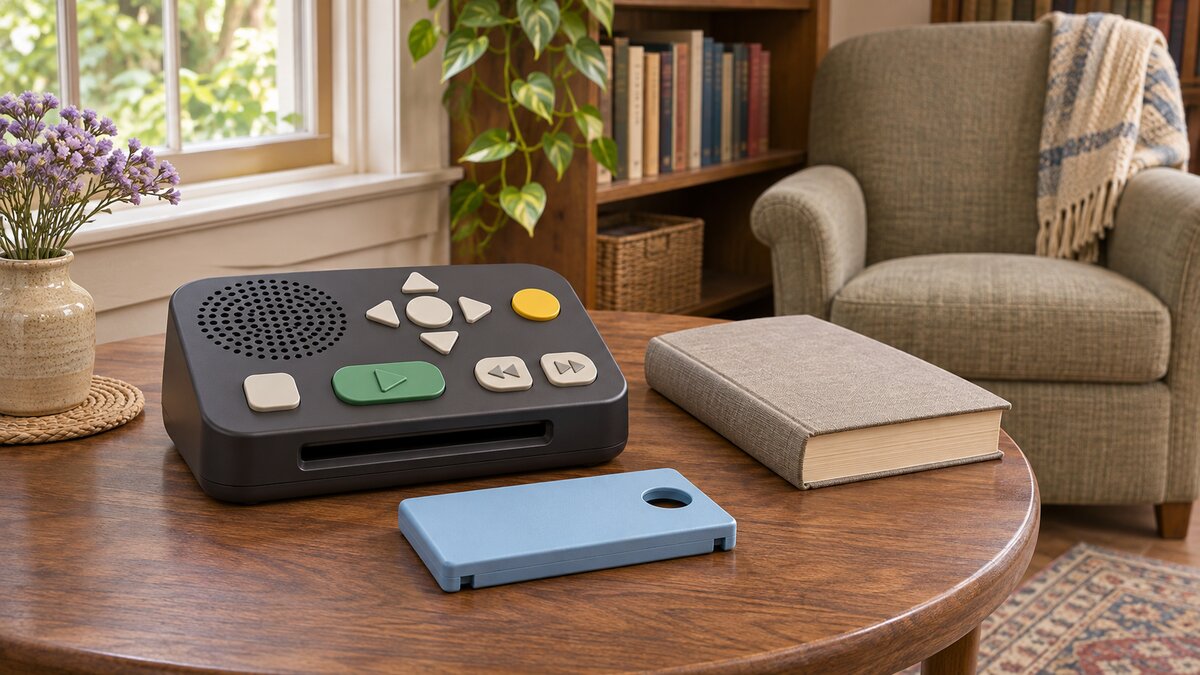
If reading ordinary print has become difficult because of a disability, you may be able to borrow talking books and a player for free. The Library of Congress sends books by mail through its National Library Service for the Blind and Print Disabled (NLS) and a network of cooperating libraries. You can use a loan player without a smartphone or home internet.
Start with one book you would like to finish. Then call 888-657-7323 or find your NLS network library by state. If you’re helping a parent, ask what has been getting in the way of that book. Can they see the words with their glasses? Can they hold the book open? Their answer can help the librarian explain which services might fit.
Who can use the talking-book library
This guide covers individual U.S. residents. NLS also serves eligible U.S. citizens abroad through a separate overseas service. A person who is blind may qualify. So may someone whose vision, even with correction, keeps them from reading standard print. A physical disability that prevents someone from holding a book or turning its pages can also qualify. A perceptual or reading disability may qualify when it substantially limits the person’s ability to read print. Someone with a temporary disability may qualify while it keeps them from using print. See the NLS eligibility and application guidance.
Describe what happens when you try to read. “I can make out the words, but the book closes whenever I let go to turn a page” gives the librarian a place to start. A qualified person must certify eligibility. The network library can explain who can certify your application and how to reach that person. If reading has become difficult for a new or unexplained reason, bring that change to the reader’s healthcare professional as well. YouRetire’s guide to vision changes and everyday safety at home covers other tasks worth mentioning at that visit.
Choose how the first book will arrive
Books by mail for someone who likes physical controls
Ask the network library for a loan player and books on cartridges. A cartridge is a small, reusable object that goes into the player. It can hold several books. Libraries mail them postage-free, and readers can return them the same way. NLS players have built-in spoken instructions and adjustable reading speed. Some models have extra ways to move between chapters or set bookmarks. Describe the controls the reader can comfortably use and ask what the library can lend. The NLS equipment guide describes the options.
Think about where the player will live. Could the reader reach it from their usual chair? Can they find the play button by touch? Would someone need to open the mailing container? A family member might handle the trip to the mailbox once a week while the reader chooses every title and operates the player independently. Ask about these details before spending money on equipment. NLS recordings require compatible playback equipment or software.
Downloads for someone who already likes their phone or tablet
NLS calls its download service BARD, short for Braille and Audio Reading Download. First enroll as an NLS reader, then ask the network library for BARD access. With a compatible device and internet connection, a reader can download titles using the free BARD Mobile app. Mobile data charges can depend on the reader’s phone plan. If the device is older, check the current BARD sign-up and software requirements before planning around it.
Ask the reader to show you how they usually open an app or adjust the volume. Someone who uses a phone for calls but finds its touch screen frustrating may prefer the loan player. Someone who travels with a tablet might like picking the next book themselves while away. If the reader uses braille, ask about physical braille books or a loan display for electronic braille. Audio is one choice among several.
Complete the individual application
- Find the library for the reader’s address. If you live in another state, search the directory using the reader’s location. Call together if they want help. Ask how to obtain the individual application, how to return it, and whom to contact if part of it is hard to read or complete.
- Choose paper or online. The online application calls for an email address the reader can access and an email address for the professional who will certify eligibility. The paper route works without a reader email address. The certifier signs the paper form. The library can explain how to return it, including by mail. Without email, start with mailed materials. If the reader adds an email later, the library can help arrange BARD access. NLS explains the different requirements for online and paper applications.
- Identify a certifier before booking an appointment. An optometrist, registered nurse, therapist, or another qualified professional may be able to certify the application. NLS says that in many cases a network librarian can certify eligibility by phone. Ask what the library can do for this reader. If using the online route, tell the certifier to expect an email from NLS. Review the NLS explanation of who can certify eligibility.
- Tell the library what the reader wants first. Have one title and author ready, plus a backup in case the preferred book is unavailable. A request such as “the first book in the series, in Spanish, on cartridge” gives the librarian more to work with than “mysteries.” Say whether the reader needs to borrow equipment.
- Agree on how to follow up. Note which library received the application, the date sent, and how the reader prefers to hear back. The network library follows up after certification. If the reader hears nothing, use the library’s directory number to check whether it received the form and what it still needs.
Ask the reader which part they want you to handle. You can read questions aloud or look up the library number while they answer for themselves. Use the contact details listed by the library when sending a completed form. If siblings are coordinating, a note saying “Dad mailed the application Tuesday” may be all they need. Keep the signed form, email account, reading history, and passwords out of family group chats.
Make the first loan easy to use and return
When the package arrives, keep the mailing container and address card together. Ask the reader which title they want to try. Give them time to find play and pause, adjust the speed, stop, and resume on their own. A voice that sounds rushed at first may be comfortable a little slower. If a cartridge contains several titles and only the first one seems to play, tell the library which player you have and ask how to move to the next book.
For a mailed loan, NLS describes a reversible address card. Turn it over and put it back so the library’s address shows for the return. If the label or container looks different, ask the issuing library how to send it back. Keep the player for the next loan while the reader is using the service. If they stop using it, ask the issuing library about returning the equipment. The NLS answers about borrowing, mailing, and returning items explain how the loan works.
Two families, two different first books
A reader who misses a series
In this example, Elena can read a large headline but cannot follow a page of ordinary print with her glasses. Her daughter suggests a phone app. Elena prefers buttons she can feel and asks for the next mystery by her favorite author. Together they call the network library, ask about certification, and request a paper application. Elena chooses what to read. Her daughter agrees to help put finished cartridges back in the mail.
A reader moving to assisted living
Imagine Lee, whose physical disability keeps him from holding a book. He uses a tablet and wants to keep reading the same biography as his brother. As the NLS guidance for residents of care facilities explains, eligible residents can get books sent directly to them there. Lee asks the network library how to update his delivery address, check the title, and obtain BARD access. His brother borrows his own copy through his public library. Their next Sunday call can start with what they thought of the first chapter.
If a book group has already picked its next title, give the librarian the author as well as the title. If no accessible copy is available, ask for a similar book or suggest that the group choose from titles the reader can get. For ideas, the November–December 2026 issue of Talking Book Topics groups recent additions by subject and lists book numbers that a librarian can look up. For families who want to restart a regular conversation, YouRetire’s guide to staying connected in retirement offers other ways to build a routine around a shared interest.
Your next call
Write down the book the reader would most like to open tonight. Call 888-657-7323 with their permission, describe the barrier they encounter with print, and ask two questions. Who can certify their application? What would they need to get that book by mail or download? Leave the call with a library contact, one agreed next step, and the reader’s choice of title.
Sources
We checked these National Library Service pages from the Library of Congress on November 26, 2026.
Keep Reading
Related guides in Family Planning
Trusted Help
Trusted planning and legal help
Forms and legal requirements vary by state. Use these sources to prepare questions and then confirm the right document with a qualified professional.
Use these links to verify eligibility, coverage, state rules, or local services before making a personal medical, legal, or financial decision.