
A practical family guide to VA cemetery planning, pre-need decisions, burial scheduling, memorial items, funeral honors, and burial-allowance paperwork.
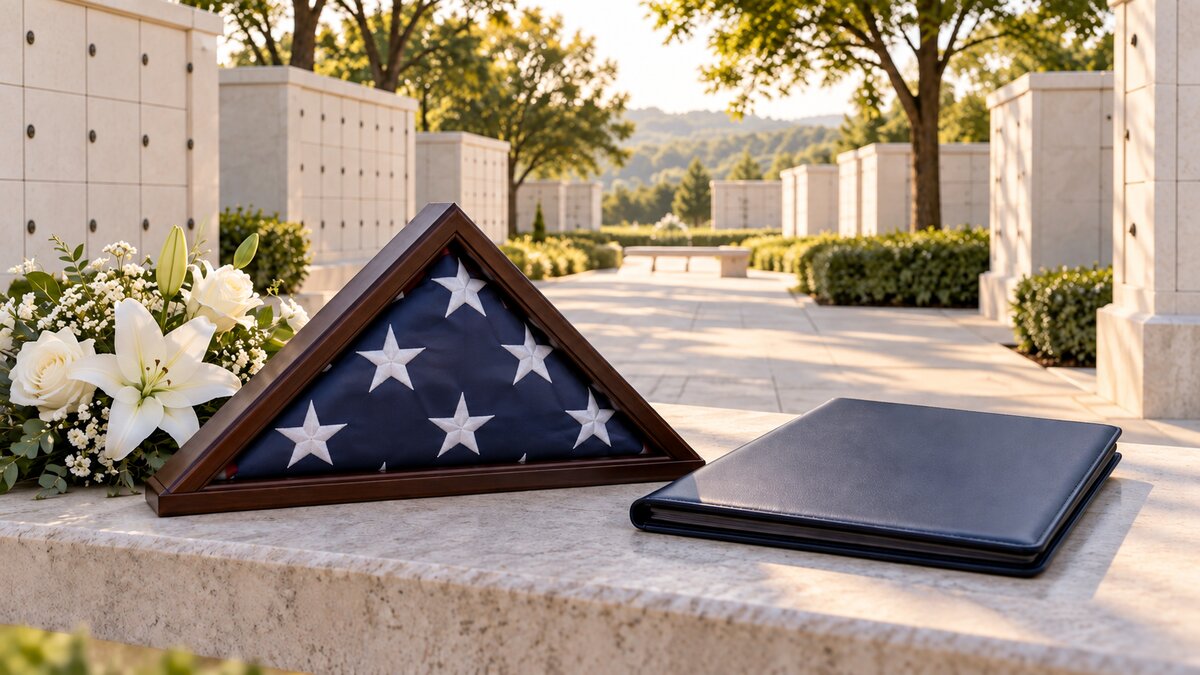
Scope and educational boundary: This guide helps Veterans, spouses, adult children, and other family helpers organize U.S. Department of Veterans Affairs burial and memorial steps before a death and at the time of need. It is educational information, not legal, financial, tax, funeral, cemetery, or benefits advice. Eligibility depends on military service, discharge character, family status, cemetery rules, and current federal law. VA, the cemetery, and the relevant military service make the actual decisions.
Veterans burial benefits are often discussed as if they were one package. In practice, a family may face several separate tasks: choosing a cemetery, proving eligibility, scheduling a burial, requesting military funeral honors, ordering memorial items, and asking whether an allowance can reimburse part of the cost. A calm plan keeps those tasks from becoming one confusing promise of a “free funeral.”
Start with three separate decisions
- Where will burial or memorialization happen? A VA national cemetery, a VA grant-funded state, tribal, or territorial Veterans cemetery, Arlington, and a private cemetery do not all use the same process.
- Which honors or memorial items does the family want? A burial flag, military funeral honors, headstone or marker, medallion, and Presidential Memorial Certificate can involve different requests.
- Who is paying which costs? Cemetery services, funeral-home services, transportation, cremation, a private plot, and monument placement are different cost buckets. A possible VA burial allowance is not the same as no-cost burial services in a VA national cemetery.
Write the three answers on one page. This makes conversations with a funeral director, cemetery, and VA much more precise. For broader preferences about burial or cremation, services, contacts, and payment, use YouRetire's funeral, burial, and final wishes checklist.
Before the time of need: build a compact Veteran burial file
1. Find the service record before it is urgent
A DD214 or another accepted separation document is often the key proof of service. Keep the original in a protected place and put a clearly marked copy in the family file. If the record is missing, the National Archives military-service-records process explains who can request a copy and includes a burial or emergency request path. Record the Veteran's full service name, branch, dates of service, service number if known, and place of discharge so a later search is easier.
Do not place a full Social Security number or an unrestricted DD214 in a shared family calendar, email thread, or cloud folder that many people can open. Instead, note where the protected copy is stored and who may retrieve it. The same access rule is useful for the other records in YouRetire's document organizer for a move or care change.
2. Identify the cemetery lane
Use the official National Cemetery Administration cemetery finder to separate VA national cemeteries from state, tribal, and territorial Veterans cemeteries. The latter locations are locally operated and may have their own residency or eligibility requirements. Arlington has its own process. If a private cemetery is preferred, ask in writing about the plot, opening and closing, setting a government marker, perpetual-care charges, and any restrictions on urns or inscriptions.
3. Consider a pre-need eligibility decision
Before death, an eligible person can ask VA for a national-cemetery eligibility decision. The official pre-need eligibility page explains the online and paper routes, including VA Form 40-10007 and supporting documents. A separate application may be needed for each person whose eligibility the family wants determined.
A pre-need letter is useful evidence, but it does not reserve a particular cemetery or gravesite. Availability and eligibility may be reviewed again at the time of need. State, tribal, territorial, and Arlington cemetery planning should be handled with the specific cemetery rather than assumed to follow the VA national-cemetery form.
4. Record choices without turning them into guarantees
Note the preferred cemetery and an alternate, casket or cremation preference, a preferred religious emblem or inscription, whether military funeral honors are desired, and who should receive the flag. Label these as preferences unless the responsible organization has confirmed them. Review the file after a move, marriage, divorce, death of a spouse, change in dependent status, or change in cemetery preference.
At the time of need: make the first calls in order
- Choose or contact the funeral director. The funeral director can coordinate the disposition, death certificates, transportation, and many cemetery and honors requests, but the family should still keep its own log.
- For a VA national cemetery, start the scheduling process. The official VA burial-scheduling guide directs families or funeral directors to the National Cemetery Scheduling Office and lists the documents and decisions to prepare. Use the phone number and hours on the current page rather than an old printed card.
- Prepare service and relationship proof. Have a copy of the DD214 or other accepted discharge document. VA may also need a death certificate and records establishing a spouse or dependent relationship.
- Decide the practical details. Be ready to name the preferred cemetery, casket or cremation, urn or casket dimensions, memorial type, inscription choices, and requested honors or items.
- Request military funeral honors early. A funeral director or personal representative can coordinate the request. The official National Cemetery Administration military-funeral-honors page explains the request path and ceremony.
- Write down every handoff. Record the date, office, staff name, confirmation number, documents sent, promised next step, and follow-up date. Do not send original service or vital records unless an official instruction specifically requires an original.
Know what changes with the cemetery choice
VA national cemetery
For an eligible burial, VA describes included cemetery services such as an available gravesite, opening and closing, a government burial liner, a government headstone or marker, and ongoing care. The official national-cemetery benefits page also identifies Veteran-specific items and honors. Funeral-home or cremation-provider services remain a separate arrangement, so families should not interpret cemetery benefits as payment of every funeral expense.
State, tribal, or territorial Veterans cemetery
These cemeteries may receive VA grants but are operated by their respective governments. Confirm eligibility, residency rules, pre-need procedures, fees, scheduling, and memorial policies directly with the location. A VA national-cemetery pre-need letter should not be treated as a substitute for a local cemetery's decision.
Private cemetery
An eligible Veteran buried in a private cemetery may qualify for certain government-furnished memorial items, but the private cemetery can still charge for a plot, placement, setting, maintenance, or other services. VA's private-cemetery guidance distinguishes a government headstone or marker from a medallion placed on a privately purchased marker and identifies the relevant forms. Ask the cemetery to approve the selected item before ordering or committing to placement costs.
A burial allowance is a separate claim
A monetary burial allowance is not automatic for every Veteran's funeral and is not the same benefit as an interment in a VA national cemetery. The official VA burial-allowance page ties eligibility to the claimant, the Veteran's status and circumstances of death, unreimbursed expenses, and the type of allowance requested. Filing deadlines differ: some claims have a two-year limit, while listed exceptions have no time limit.
Keep itemized receipts in the name of the person who paid, the death certificate, service records, and any documents VA requests. Some eligible surviving spouses may receive an automatic payment when VA receives notice of the death and the spouse is correctly listed in the Veteran's profile; other claimants may need the online process or VA Form 21P-530EZ. Check the live page for current rules and amounts. This guide deliberately gives no dollar figure because date-based tables can change.
Memorial items and honors may need their own requests
A family should not assume that scheduling the burial automatically orders every desired item. Ask who is handling the flag, military funeral honors, headstone or marker, medallion, and Presidential Memorial Certificate. At a VA national cemetery, staff may coordinate some items. For a private cemetery, separate applications and cemetery approval may be necessary.
VA's Presidential Memorial Certificate guidance explains when a certificate is presented at a national-cemetery burial and how an eligible family member or friend can apply after a private-cemetery burial. It also tells applicants to send copies of supporting records, not originals.
An illustrative family example
This example is fictional. Elena is helping her father, a Navy Veteran, record final wishes. They locate his DD214, store the original securely, and place a copy in a limited-access burial file. He prefers a nearby VA national cemetery, so they request a pre-need decision and record a state Veterans cemetery as an alternative. They also note that he wants cremation and military funeral honors.
Years later, the family gives the funeral director the file and calls the current VA scheduling number. They learn that the preferred cemetery has availability, confirm the urn information, and ask the funeral director to request honors. Elena keeps funeral-home receipts but does not assume they will all be reimbursed. After the service, she checks the current burial-allowance rules and follows the separate application path that matches the family. The pre-need work shortened the search; it did not guarantee the cemetery, honors, or payment.
A family checklist
Before death
- Locate the DD214 or accepted separation record and protect the original.
- List service identity details needed if a replacement record must be requested.
- Choose a preferred cemetery lane and at least one alternative.
- Ask the chosen state, tribal, territorial, Arlington, or private cemetery about its own rules.
- Consider a VA national-cemetery pre-need eligibility application.
- Record casket or cremation, inscription, honors, and flag-recipient preferences.
- Name the family contact and an alternate who can retrieve the protected file.
- Review preferences and documents after major family or address changes.
At the time of need
- Contact the funeral director and obtain certified death certificates.
- Use the current official cemetery and scheduling contacts.
- Send copies of service and relationship records through the instructed channel.
- Confirm the cemetery, disposition, dimensions, memorial, and inscription details.
- Request military funeral honors as early as practical.
- Confirm who is ordering each memorial item.
- Keep itemized invoices and proof of payment.
- Check burial-allowance eligibility and filing deadlines separately.
- Record every confirmation and unresolved question.
- Ask Social Security about survivor benefits through the workflow in YouRetire's survivor-benefits family checklist.
Protect privacy and avoid pressure
Service records, death certificates, and benefit applications contain information that can be misused. Start from a typed .gov address, not a link in an unsolicited message. Do not pay a stranger to “unlock” a benefit, share a VA account password, or send identity documents to a caller who contacted the family first. If a company mixes government benefits with a funeral sales package, ask for each price and service in writing and compare it with YouRetire's funeral-home price-shopping guide.
When to use official or qualified help
Use the National Cemetery Scheduling Office for VA national-cemetery scheduling questions, the specific cemetery for local policies, the funeral director for disposition and coordination, and the appropriate military-service contact for funeral honors. A VA-accredited representative can help with a pre-need or benefit application. For disputes about authority, contracts, estates, or payment responsibility, consult a qualified professional in the relevant state rather than relying on a general checklist.
Your next action
Today, locate the service record and write down the preferred cemetery lane. This week, verify the cemetery's current process and decide whether a pre-need application fits. Put the decision letter, record copies, preferences, and contact log in one protected file. Tell two trusted people where it is without emailing the sensitive documents themselves.
Sources
- U.S. Department of Veterans Affairs: Eligibility for burial in a VA national cemetery
- U.S. Department of Veterans Affairs: Pre-need eligibility for burial in a VA cemetery
- U.S. Department of Veterans Affairs: Schedule a burial for a Veteran or family member
- National Cemetery Administration: Find a Cemetery
- U.S. Department of Veterans Affairs: What burial in a VA national cemetery includes
- U.S. Department of Veterans Affairs: Veterans burial allowance and transportation benefits
- U.S. Department of Veterans Affairs: Burial in a private cemetery
- National Cemetery Administration: Military Funeral Honors
- National Archives: Request military service records
- U.S. Department of Veterans Affairs: Presidential Memorial Certificates
Keep Reading
Related guides in Legal Documents
Trusted Help
Trusted Social Security and legal help
If this decision affects Social Security benefits, paperwork, or authority to act for someone else, confirm the next step with the program or a qualified legal professional.
Use these links to verify eligibility, coverage, state rules, or local services before making a personal medical, legal, or financial decision.