
Senior Safety
Food Benefit Paperwork for Older Adults: A Family Guide to SNAP, Senior Farmers' Market, and Meal Programs
A practical family guide to organizing SNAP, Senior Farmers' Market benefits, senior food boxes, local meal programs, and renewal paperwork for older adults.
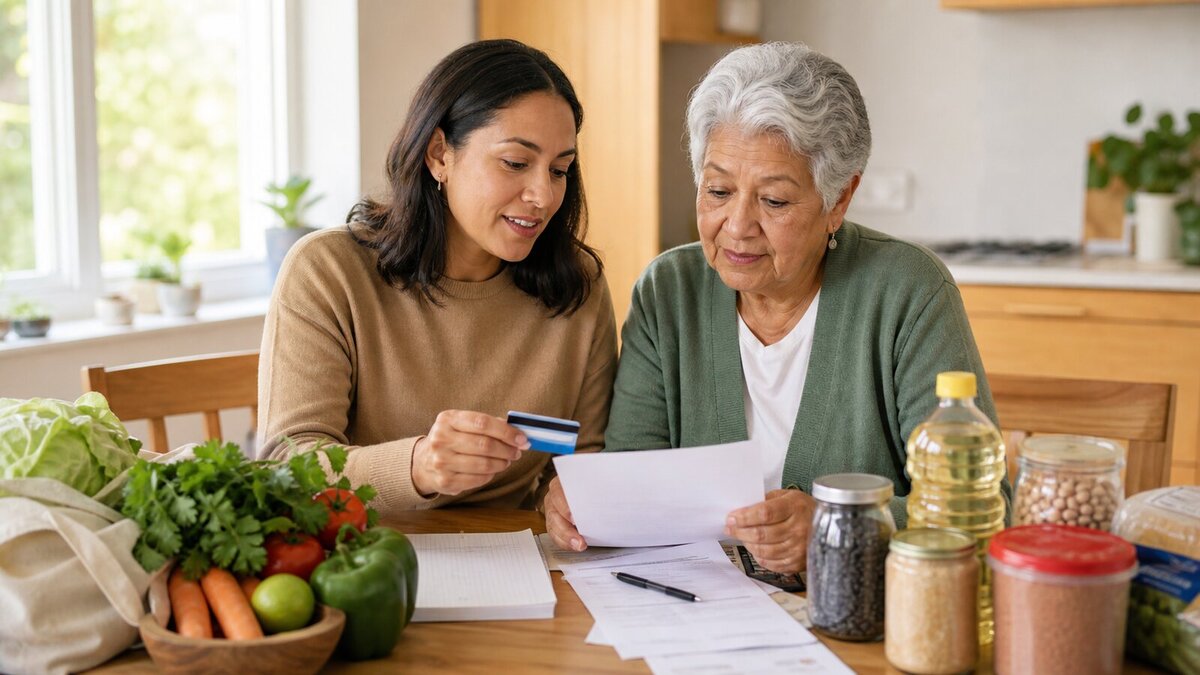
Food help for an older adult is rarely one form or one phone call. A parent may qualify for SNAP but never apply because the state website looks confusing. A spouse may be eligible for a local home-delivered meal program but assume it is only for people with no family nearby. A caregiver may hear about farmers' market coupons in July, then lose the flyer before the county office opens applications again. The result is often the same: the family keeps paying out of pocket, skipping groceries, or relying on emergency pantry visits when a steadier mix of programs might help.
This guide is educational only. Food benefit rules, income limits, application steps, documents, and local availability vary by state, county, tribe, and program. Use the official links in the Sources section, then confirm personal eligibility and deadlines with the state SNAP agency, Area Agency on Aging, local nutrition provider, or another qualified benefits counselor.
Start with a food-help map, not a single program
Families often start by asking, "Does Mom qualify for food stamps?" That is a reasonable question, but it is too narrow. A better first step is to map the whole food routine: groceries, prepared meals, transportation, dietary needs, kitchen safety, and paperwork capacity. Different programs solve different parts of the problem.
- SNAP helps eligible households buy food through an Electronic Benefit Transfer card. USDA's Food and Nutrition Administration explains SNAP as a federal nutrition assistance program administered through state agencies.
- Senior Farmers' Market Nutrition Program benefits, when available locally, help eligible older adults buy fresh fruits, vegetables, herbs, and honey from approved farmers, farmers' markets, roadside stands, or community-supported agriculture programs.
- Congregate meals are meals served in community settings such as senior centers, schools, faith communities, restaurants, or other gathering places.
- Home-delivered meals bring meals to older adults who are not able to attend congregate meal sites and may also provide regular check-ins.
- Commodity Supplemental Food Program food packages can supplement the diets of eligible people age 60 and older in participating areas.
- Food pantries and local emergency food programs can fill short gaps while applications are pending or when a household has an unexpected bill.
The right plan may combine several options. For example, an older adult might use SNAP for regular groceries, a local senior center lunch twice a week for social connection, farmers' market benefits during the growing season, and a food pantry during a temporary utility or medical bill crunch.
What SNAP paperwork usually asks families to organize
SNAP is run by states, so the exact application and verification list varies. The USDA SNAP eligibility page explains that households must meet certain income and resource tests unless everyone in the household receives TANF, SSI, or in some places other general assistance. USDA also notes that special rules apply for households with older adults or people with disabilities.
Before applying, gather a simple folder rather than trying to answer everything from memory. A practical SNAP folder for an older adult can include:
- Photo identification and Social Security number information for the applicant.
- Proof of address, such as a lease, mortgage statement, utility bill, or official mail.
- Monthly income records, including Social Security, SSI, pensions, Veterans benefits, wages, annuities, or other regular payments.
- Bank account balances or other resource information if the state asks for it.
- Rent, mortgage, property tax, homeowner association, lot rent, or shelter-cost records.
- Utility bills, phone bills, and heating or cooling costs if the application asks about them.
- Medical expense records for an older adult or person with a disability, such as prescription costs, Medicare premiums, supplemental premiums, dental bills, hearing aids, eyeglasses, transportation to care, or other allowed expenses the state may consider.
- Authorized representative forms if someone else will apply, speak with the agency, or use benefits on the older adult's behalf.
Medical expenses are easy to miss because families often focus only on income. If an older adult pays for recurring prescriptions, Medicare premiums, doctor copays, dental work, transportation to appointments, or incontinence supplies, keep receipts and statements together. Do not assume an expense counts; ask the state agency how to report it and keep copies of whatever is submitted.
Find the correct state office before sharing information
Because SNAP applications are handled by states, families should avoid random search results and start with the official USDA SNAP state directory. That directory links to state SNAP websites, local office information, EBT contacts, and application resources.
This matters for safety as well as convenience. Older adults are often targeted by benefit scams, fake application pages, and calls that ask for card numbers or personal information. A family helper should confirm the official state website, save the correct phone number, and keep the older adult's EBT card number and PIN private. If someone is already receiving SNAP and receives a suspicious text, call, or email, contact the state EBT customer service line through the official state directory rather than using the number in the message.
Senior Farmers' Market benefits are seasonal and local
The USDA Senior Farmers' Market Nutrition Program provides coupons or electronic benefits to eligible low-income older adults for use with approved local producers. It is not available in every community in the same way, and distribution can be seasonal. Some areas run out of benefits, open enrollment during a short window, or require pickup at a senior center, county office, farmers' market, or nutrition provider.
Families should ask three practical questions early in the season:
- Who administers the local program: the state agency, Area Agency on Aging, county office, senior center, tribal organization, or another partner?
- When and where are benefits distributed, and is there a waiting list or first-come process?
- What identification, age proof, residency proof, income statement, or proxy form is needed if a caregiver picks up benefits?
These benefits are usually modest, but they can improve produce access and make farmers' market trips more affordable. They also create a reason to discuss transportation, meal planning, and whether the older adult can safely wash, store, chop, and cook fresh foods at home.
Meal programs can solve more than food cost
Not every food problem is a grocery-budget problem. Some older adults have enough income for food but cannot stand long enough to cook. Others forget meals, avoid the stove after a fall, cannot drive to the store, or feel isolated. Senior nutrition programs can help with meals, social connection, and routine check-ins.
The Administration for Community Living explains that its nutrition services support both congregate and home-delivered meals for older adults. ACL describes congregate meal programs as healthy meals served in group settings, and home-delivered meals as meals for older adults who are not able to attend congregate sites.
When calling a local provider, ask about eligibility, cost-sharing or suggested contributions, delivery days, special diets, waitlists, emergency shelf-stable meals, pet food partnerships, and whether the delivery volunteer can report concerns if the older adult does not answer the door. A waitlist does not mean the call was wasted; it tells the family to build a backup plan while the application is pending.
Do not overlook CSFP senior food boxes
The Commodity Supplemental Food Program supplements the diets of eligible low-income people at least 60 years old with USDA Foods. It is not the same as SNAP, and it is not available everywhere. In participating areas, families may hear it described as a senior food box, commodity box, or monthly food package.
Ask the Area Agency on Aging, food bank, county office, or state agency whether CSFP operates locally. If it does, ask how often boxes are distributed, whether delivery is available, what proof is required, how proxy pickup works, and whether the foods fit the older adult's chewing, swallowing, sodium, diabetes, allergy, or cultural food needs. If a box contains items the person cannot use, the program may still be helpful, but the family should plan swaps, pantry sharing, or other supports rather than letting food expire.
A family decision checklist
Use this checklist during a family meeting or benefits call:
- Can the older adult shop independently, or is transportation the main barrier?
- Can the person prepare meals safely, including lifting pots, reading labels, using the stove, and storing leftovers?
- Is the problem cost, appetite, memory, mobility, isolation, dental pain, swallowing, grief, depression, or a mix of factors?
- Has anyone checked SNAP eligibility through the official state agency?
- Are medical expenses documented for SNAP screening?
- Are local senior center meals or home-delivered meals available?
- Does the area offer Senior Farmers' Market benefits or CSFP food boxes?
- Who is authorized to speak with agencies, submit paperwork, pick up benefits, or receive notices?
- Where will approval letters, renewal notices, EBT mail, and recertification deadlines be stored?
- What is the backup plan if an application is denied, delayed, or placed on a waitlist?
Example: building a steady food-support plan
Imagine an 80-year-old widower who lives alone. His Social Security covers rent and utilities, but grocery prices have pushed him toward toast, canned soup, and skipping produce. His daughter notices unopened medication bottles and a mostly empty refrigerator. He does not want charity and does not want to give up control.
A respectful plan might start with choice. The daughter asks permission to help compare options, then uses the USDA state directory to find the official SNAP application. They gather income, rent, utility, and medical expense records. She also calls the Area Agency on Aging to ask about senior center lunches and whether a home-delivered meal assessment is appropriate. In spring, she asks about Senior Farmers' Market benefits. While the SNAP application is pending, they identify one nearby pantry and one grocery-delivery option for difficult weeks.
The goal is not to take over his food decisions. The goal is to reduce paperwork friction, protect privacy, and create several practical ways for food to arrive before the refrigerator is empty.
Renewals and notices matter as much as applications
Food benefits can stop if renewal notices are missed. Families should ask each program how notices are sent, how often eligibility is reviewed, and whether online accounts, email, text alerts, paper mail, or phone interviews are used. Put renewal dates on a shared calendar if the older adult agrees. Keep screenshots, confirmation numbers, mailed copies, and names of agency representatives after every submission.
If benefits are denied, reduced, or closed, read the notice before reacting. It should explain the reason, deadline, and appeal or fair-hearing rights. Sometimes the issue is a missing document, old address, missed interview, or unreported change. Other times the agency decision may be correct. Either way, respond by the stated deadline and ask the agency, legal aid, or a benefits counselor what the notice means.
Next steps this week
Pick one low-friction action. If food cost is the main problem, use the USDA state directory to find the official SNAP application. If cooking or isolation is the bigger issue, call the Area Agency on Aging or Eldercare Locator and ask about congregate and home-delivered meals. If produce access is seasonal, ask early about Senior Farmers' Market benefits. If the older adult is already using emergency pantries, ask whether a local benefits screener can review SNAP, meal programs, and senior food boxes together.
Food help works best when it is organized before a crisis. A small folder, a verified phone number, and one calendar reminder can prevent missed meals, missed notices, and repeated emergency calls.
Sources
- USDA Food and Nutrition Administration: SNAP eligibility
- USDA Food and Nutrition Administration: SNAP state directory
- USDA Food and Nutrition Administration: Senior Farmers' Market Nutrition Program
- USDA Food and Nutrition Administration: Commodity Supplemental Food Program
- Administration for Community Living: Nutrition Services
- Administration for Community Living: Basics of Congregate Meals
- Administration for Community Living: Basics of Home-Delivered Meals
- National Institute on Aging: Healthy eating, nutrition, and diet
- Eldercare Locator
Keep Reading
Related guides in Senior Safety
Trusted Help
Trusted Social Security and legal help
If this decision affects Social Security benefits, paperwork, or authority to act for someone else, confirm the next step with the program or a qualified legal professional.
Use these links to verify eligibility, coverage, state rules, or local services before making a personal medical, legal, or financial decision.