
How to prepare for power outages, storms, evacuation, medical equipment needs, medications, pets, and caregiver communication.
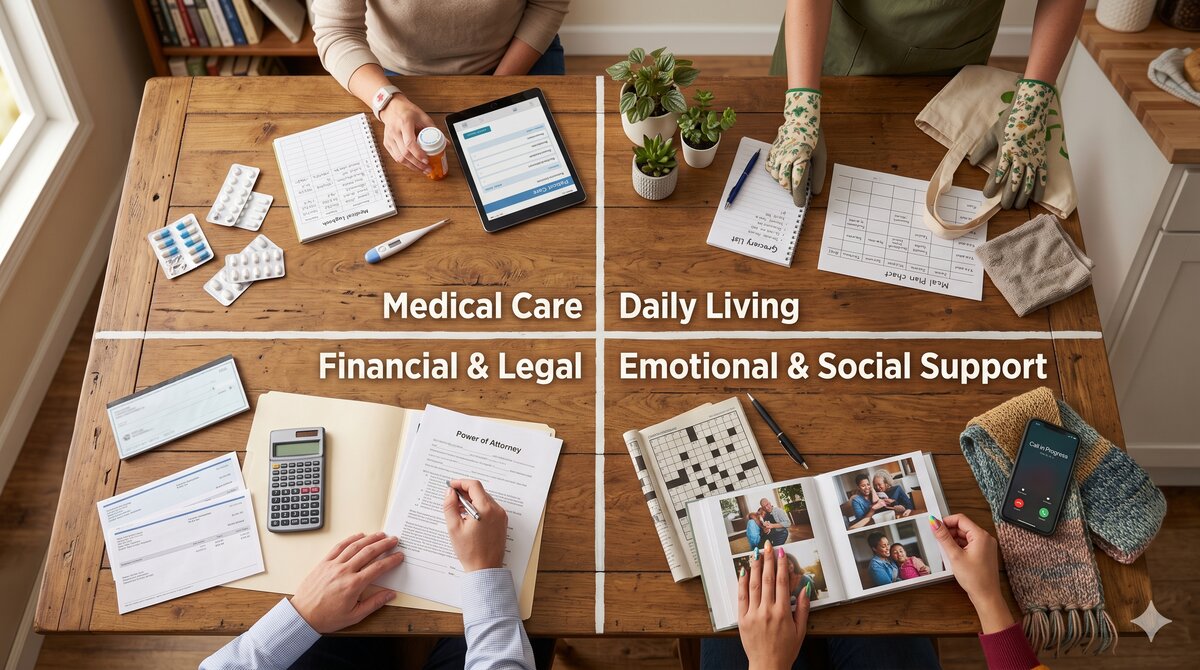
Emergency planning is more complicated when an older adult uses medications, mobility equipment, oxygen, CPAP, refrigerated supplies, hearing aids, vision aids, medical devices, or caregiver support. A basic emergency kit is helpful, but it is not enough if the person depends on electricity, transportation, prescriptions, or another person arriving on time.
A strong emergency plan should work when phones are low, power is out, roads are blocked, caregivers cannot arrive, pharmacies are closed, and normal routines are interrupted. The goal is to protect health, maintain communication, and reduce confusion during the first hours and days of an emergency.
Why emergency planning matters for older adults
Older adults may face higher risk during storms, fires, floods, earthquakes, extreme heat, power outages, evacuations, and public health emergencies. The risk is even higher when someone has chronic health conditions, limited mobility, memory loss, hearing loss, vision problems, or daily care needs.
An emergency can quickly create problems such as:
- Missed medications.
- Loss of power for oxygen, CPAP, power wheelchairs, hospital beds, or lift chairs.
- Refrigerated medications becoming unsafe.
- Caregivers being unable to reach the home.
- Phones, hearing aids, or medical alert devices losing battery power.
- Difficulty evacuating safely.
- Confusion about where to go or whom to call.
- Loss of access to doctors, pharmacies, food, water, or transportation.
The CDC highlights emergency planning concerns for older adults in its Emergency Preparedness Concerns for Older Adults resource. Ready.gov also provides emergency planning guidance for older adults and people with disabilities.
Start with a personal risk review
Emergency planning should be based on the person’s actual needs, not a generic checklist. A healthy older adult who drives and lives independently may need a different plan than someone who uses oxygen, has dementia, depends on a caregiver, or cannot leave home without assistance.
Review these questions:
- Can the person evacuate without help?
- Can they walk stairs if elevators stop working?
- Do they rely on oxygen, CPAP, dialysis, refrigerated medication, or powered equipment?
- Do they have enough medication if the pharmacy is closed?
- Can they hear alerts, alarms, phone calls, or door knocks?
- Can they read written instructions during stress?
- Can they safely prepare food and water if utilities are interrupted?
- Who checks on them if family or caregivers cannot arrive?
- Where will they go if the home is unsafe?
- How will pets, service animals, or emotional support animals be handled?
Build the emergency basics
Every older adult should have basic emergency supplies. These should be easy to find, easy to carry when possible, and reviewed regularly. Keep supplies in a known location and tell family caregivers, neighbors, or backup helpers where they are stored.
Basic supplies may include:
- Water for several days.
- Shelf-stable food that does not require cooking.
- Manual can opener.
- Flashlights and extra batteries.
- Battery-powered or hand-crank radio.
- Cell phone chargers and backup power banks.
- First aid supplies.
- Personal hygiene items.
- Extra eyeglasses, contacts, hearing aid batteries, and assistive items.
- Blanket, change of clothes, and comfortable shoes.
- Copies of key medical, legal, and insurance documents.
- Cash in small bills if ATMs or card systems are unavailable.
- Pet food, leash, carrier, medication, and vaccination records if applicable.
Ready.gov provides a general emergency supply list at Build a Kit. The National Institute on Aging also provides a simple emergency kit overview here: 10 Emergency Kit Essentials.
Prepare a medication plan
Medication problems are one of the most common risks during an emergency. A person may run out of prescriptions, lose access to the pharmacy, forget doses during evacuation, or be unable to explain what they take to emergency responders.
The medication plan should include:
- A current medication list with drug names, dosages, timing, and purpose.
- Allergy information.
- Pharmacy name, phone number, and address.
- Doctor and specialist contact information.
- Copies of insurance, Medicare, Medicaid, or prescription drug cards.
- Instructions for high-risk medications, such as insulin, blood thinners, seizure medication, heart medication, or oxygen-related treatment.
- A plan for refrigerated medications.
- A plan for controlled medications that may be harder to replace quickly.
When possible, ask the doctor or pharmacist whether extra medication can be kept on hand. Some emergency plans recommend keeping several days of critical medication available, but this depends on the medication, insurance rules, refill timing, and medical guidance.
Plan for refrigerated medication
Some medications, including certain insulin products and biologic medications, may need temperature control. A power outage, long evacuation, or broken refrigerator can make medication unsafe.
Ask the doctor or pharmacist:
- What temperature range is required?
- How long the medication can safely be outside the refrigerator?
- Whether an insulated bag or cooler should be used.
- Whether ice packs can touch the medication directly.
- When medication should be replaced after a power outage.
- Where emergency refills can be obtained if evacuation is required.
Keep a thermometer in the refrigerator if temperature-sensitive medication is stored at home. During an outage, avoid opening the refrigerator more than necessary.
Plan for oxygen, CPAP, and powered medical equipment
Anyone who depends on oxygen, CPAP, a power wheelchair, hospital bed, lift chair, suction machine, nebulizer, dialysis equipment, or other powered medical device needs a specific power plan. Do not wait until the power is already out to find out how long equipment will run.
Ask the medical supplier or doctor:
- How long the equipment works on battery power.
- Whether backup batteries are available.
- Whether a generator, power station, or alternate power source is appropriate.
- Whether the device can be used safely with a backup power supply.
- What to do if the device stops working.
- Whether emergency oxygen backup is available.
- Whether the person should evacuate early during extended outages.
Keep equipment manuals, model numbers, serial numbers, supplier information, and operating instructions with the emergency documents. Ready.gov recommends keeping a list of medical device details and special instructions for people who use assistive or medical equipment.
Register with local emergency programs
Some communities offer emergency registries, special needs registries, transportation assistance, wellness checks, or utility priority restoration programs for people who rely on medical equipment or have access and functional needs. Availability varies by location.
Contact local emergency management, the power company, county aging office, Area Agency on Aging, or local health department to ask about:
- Special needs emergency registries.
- Medical baseline or utility priority programs.
- Accessible evacuation transportation.
- Emergency shelter options for people with medical or mobility needs.
- Backup oxygen or medical equipment support.
- Wellness check programs.
- Local emergency alert systems.
Registration does not guarantee rescue or uninterrupted power, but it can help local agencies understand who may need extra assistance during an emergency.
Create an evacuation plan
Evacuation is harder when someone has mobility limitations, dementia, oxygen needs, pets, or medical equipment. The plan should identify where the person will go, how they will get there, and what must be taken with them.
The evacuation plan should include:
- Primary evacuation destination.
- Backup evacuation destination.
- Transportation provider or family driver.
- Accessible vehicle needs.
- Medical equipment that must travel with the person.
- Medication and document bag.
- Pet or service animal plan.
- Out-of-area contact person.
- Backup plan if the first caregiver cannot arrive.
Possible destinations may include a family member’s home, hotel, accessible shelter, assisted living respite stay, or another safe location outside the affected area. If the person needs electricity for medical equipment, confirm power access before choosing the destination.
Prepare a shelter-in-place plan
Some emergencies require staying home. This may happen during storms, extreme weather, road closures, public health emergencies, or short-term power outages. The home should be prepared for basic needs during that time.
A shelter-in-place plan should include:
- Enough drinking water.
- Food that does not require cooking.
- Medication and medical supplies.
- Backup lighting.
- Charged phones and power banks.
- Battery radio or emergency alert device.
- Safe room or safest area of the home.
- Temperature plan for heat or cold.
- Hygiene and toileting supplies.
- Caregiver check-in schedule.
If the person lives alone, assign specific people to check in before, during, and after the emergency. Do not rely on one helper only.
Build a communication plan
During an emergency, phones may lose power, cell service may be weak, and family members may receive conflicting information. A written communication plan helps reduce panic and missed check-ins.
The communication plan should include:
- Primary emergency contact.
- Backup emergency contact.
- Out-of-area contact who can relay information.
- Doctor, pharmacy, caregiver, and supplier phone numbers.
- Preferred hospital.
- Local emergency management number.
- Power company outage number.
- Transportation contact.
- Neighbor or building contact.
Keep printed copies in the home, wallet, emergency bag, vehicle, and caregiver file. A phone contact list is not enough if the battery dies or the device is lost.
Prepare important documents
Important documents should be copied and stored in a waterproof folder or emergency bag. Keep the originals secure, but make sure copies are available if evacuation is required.
Documents to prepare include:
- Photo ID.
- Insurance cards.
- Medicare, Medicaid, or prescription drug cards.
- Medication list and allergy list.
- Doctor and pharmacy contacts.
- Power of attorney.
- Health care proxy or advance directive.
- Emergency contacts.
- List of medical devices and suppliers.
- Pet vaccination records if applicable.
- Recent photo of the older adult in case family members become separated.
Plan for dementia or memory loss
Emergency planning is especially important when someone has dementia, Alzheimer’s disease, or another cognitive condition. Changes in routine, noise, evacuation, unfamiliar people, and stress can increase confusion or wandering risk.
Planning steps may include:
- Keep identification on the person.
- Use medical ID jewelry if appropriate.
- Keep recent photos available.
- Prepare simple written instructions.
- Pack familiar comfort items.
- Assign a caregiver to stay with the person during evacuation.
- Notify shelters or responders about dementia-related needs.
- Keep routines as normal as possible during the emergency.
If wandering is a concern, ask local authorities or aging agencies about available safety programs.
Plan for hearing, vision, and communication needs
Emergency alerts may not work well for people with hearing or vision limitations. A plan should account for how the person receives warnings and instructions.
Consider:
- Extra hearing aid batteries or chargers.
- Backup eyeglasses.
- Large-print emergency instructions.
- Written communication cards.
- Visual or vibrating alert devices.
- Captioned emergency alerts when available.
- A caregiver or neighbor assigned to confirm warnings are received.
Plan for caregivers and backup helpers
An emergency plan should not depend on one person. The main caregiver may be stuck at work, unable to drive, sick, or affected by the same emergency. Build a backup network before help is needed.
The support network may include:
- Family members.
- Neighbors.
- Friends.
- Paid caregivers.
- Home health agencies.
- Building staff.
- Faith community contacts.
- Local aging services.
Each helper should know what they are expected to do. For example, one person may check medications, another may provide transportation, and another may receive status updates.
Prepare for extreme heat and cold
Older adults are more vulnerable to heat illness and cold-related injury. Power outages can make temperature control dangerous, especially for people with heart disease, breathing problems, diabetes, limited mobility, or dementia.
For extreme heat, plan for:
- Cooling centers or air-conditioned backup locations.
- Extra water.
- Light clothing.
- Checking indoor temperature.
- Transportation if the home becomes too hot.
For extreme cold, plan for:
- Warm clothing and blankets.
- Safe heating options.
- A backup location with heat.
- Carbon monoxide safety if generators or fuel-burning devices are used.
- Medication and oxygen plans if relocation is needed.
Review the plan after any major change
An emergency plan should be updated whenever the older adult’s health, home, support system, or medications change.
Review the plan after:
- A hospital stay.
- A new diagnosis.
- A fall or mobility change.
- A new medication.
- A new caregiver.
- A move to a new home or facility.
- A change in oxygen, CPAP, wheelchair, or medical equipment use.
- A change in emergency contacts.
Practice the plan
A plan is only useful if people know how to use it. Practice simple steps before an emergency happens.
Families should test:
- Who calls whom during an emergency.
- How to access the emergency bag.
- How to move medical equipment.
- How long backup batteries last.
- How to evacuate safely.
- How to reach the backup caregiver.
- Whether the older adult understands the plan.
Use official guidance
Official emergency planning resources can help families build a safer plan. Useful resources include:
- CDC: Emergency Preparedness Concerns for Older Adults
- Ready.gov: Older Adults
- Ready.gov: People with Disabilities
- Ready.gov: Make a Plan
- Ready.gov: Build a Kit
- American Red Cross: Older Adults Emergency Preparedness
- National Institute on Aging: 10 Emergency Kit Essentials
- DisasterAssistance.gov
Use YouRetire tools
YouRetire can help families organize emergency information before a crisis. Create and print an Emergency Contact Sheet with contacts, medical details, pharmacy information, caregiver names, and backup helpers.
Keep copies in:
- The home.
- The emergency supply kit.
- The travel bag.
- The car, if applicable.
- The caregiver’s file.
- A trusted family member’s home.
- The older adult’s wallet or purse.
Use YouRetire tools to document medications, emergency contacts, care instructions, equipment needs, evacuation destinations, and backup support. Review the information regularly so it stays current.
Bottom line
Emergency planning for older adults should be personal, practical, and tested. A good plan accounts for medications, mobility, oxygen, powered medical equipment, refrigerated supplies, caregivers, transportation, pets, documents, and communication problems.
Do not wait for a storm, fire, flood, outage, or medical crisis to organize the basics. Build the kit, print the contact sheet, review the medication list, confirm backup power needs, and assign backup helpers before an emergency happens.
Keep Reading
Related guides in Senior Safety
Trusted Help
Trusted Medicare cost help
Medicare costs, savings programs, and drug help can change by year and by state. Confirm the details with Medicare or your state before you rely on an estimate.
Use these links to verify eligibility, coverage, state rules, or local services before making a personal medical, legal, or financial decision.